Pakistan Denies Seeking Regime Change in Afghanistan Amid Cross-Border Attacks
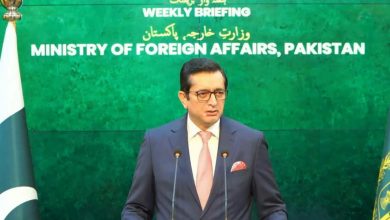
A senior Pakistani security official told Bloomberg News Agency that Islamabad is not pursuing regime change in Afghanistan, and that the country’s military operations are targeting only anti-Pakistan militant groups. The official’s statement was sent to reporters on Tuesday, 12th of Hoot (March 2).
The Pakistani official emphasized that the country is in “no rush” to halt its attacks and will continue military operations until it is assured that cross-border threats have been eliminated. He added that the duration of these attacks depends on the Taliban administration’s on-ground efforts to eradicate armed groups, and Islamabad seeks a “verifiable guarantee” in this regard.
Meanwhile, the official claimed that in recent days about 180 militant-related sites inside Afghanistan have been targeted and more than 30 Taliban checkpoints have been captured by Pakistani border forces. He stated that the attacks focus on militant infrastructures and hideouts, excluding civilians.
The Taliban administration has not yet issued an official response to these recent claims. However, the Taliban Ministry of Defense spokesperson, speaking in Kabul yesterday, alleged that at least 150 Pakistani soldiers were killed and over 200 others wounded in border clashes. According to Enayatullah Kharazmi, 28 Taliban fighters were killed and 42 wounded; these figures have not been independently verified.
The cross-border clashes and Pakistani airstrikes have now entered their seventh day, escalating tensions between the two sides to a new level. Relations between Islamabad and the Taliban administration have steadily deteriorated since the Taliban’s return to power in 2021, despite Pakistan’s initial support.
Pakistan has repeatedly accused the Taliban administration of failing to control groups such as Tehrik-i-Taliban Pakistan (TTP) and the Baloch Liberation Army. The recent surge in TTP attacks inside Pakistan’s cities, including a deadly bombing at a mosque in Islamabad last month, has increased pressure on the Taliban to respond to the activities of these groups within Afghanistan.
The ongoing situation has raised concerns about the spread of insecurity in the border regions and its impact on residents on both sides of the Durand Line—a matter for which no practical or agreed-upon solution has yet been found.