Afghanistan Must Become a Key Regional Player, Says Head of Central Asia Institute
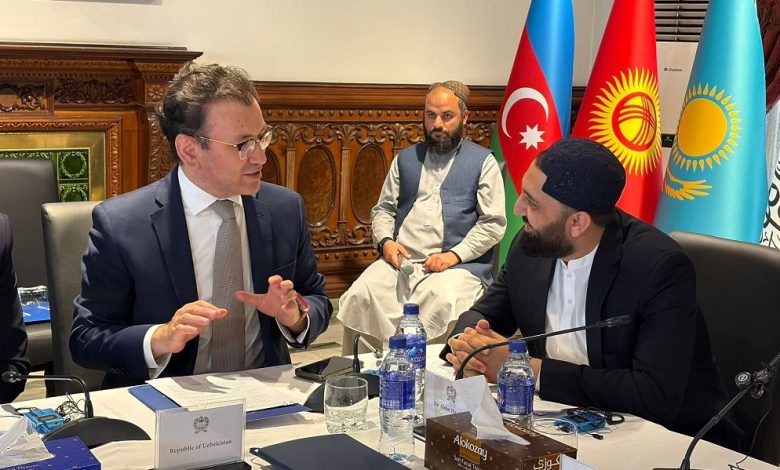
Javlon Vakhabov, head of the International Institute of Central Asia, has emphasized that Afghanistan should not be regarded as a peripheral country in the region but must play an active and decision-making role in shaping the political and economic trends of Central Asia. He stated that the stability and economic revival of Afghanistan are directly linked to the future of Central Asia.
Vakhabov made these remarks at a meeting of think tanks from Afghanistan and Central Asia held about two weeks ago in Kabul. The gathering was initiated by the Afghanistan Strategic Studies Center and was attended by heads of think tanks, experts, government officials, and private sector representatives from Central Asian countries, Azerbaijan, and Afghanistan.
Leading the institute based in Tashkent, Vakhabov added that Afghanistan should be not only a partner but also part of the decision-making processes in regional developments. He noted that viewing Afghanistan merely as a transit route overlooks the country’s vast potential.
He cited key regional projects such as the Afghan-Trans railway line, the TAPI gas pipeline, the TUTAP power transmission project, and the CASA-1000 project as examples that can elevate Afghanistan’s status from a transit corridor to an active player in the region’s production, industry, and economy.
The head of the International Institute of Central Asia also stressed the necessity of establishing legal and institutional frameworks for water and climate cooperation involving Afghanistan. According to him, discussions on the Qosh Tepe canal, holding regular technical meetings, information exchange, joint monitoring, glacial studies, and the development of early warning systems will be crucial elements of future collaboration.
Experts believe that achieving such a status for Afghanistan, in addition to regional cooperation, requires internal stability, transparent economic policymaking, and responsible interaction by the Taliban administration with its neighbors—issues that remain fundamental challenges to Afghanistan’s full integration into regional structures.