Regional Disputes Prevent Consensus on Afghanistan’s Future at Moscow Format Meeting
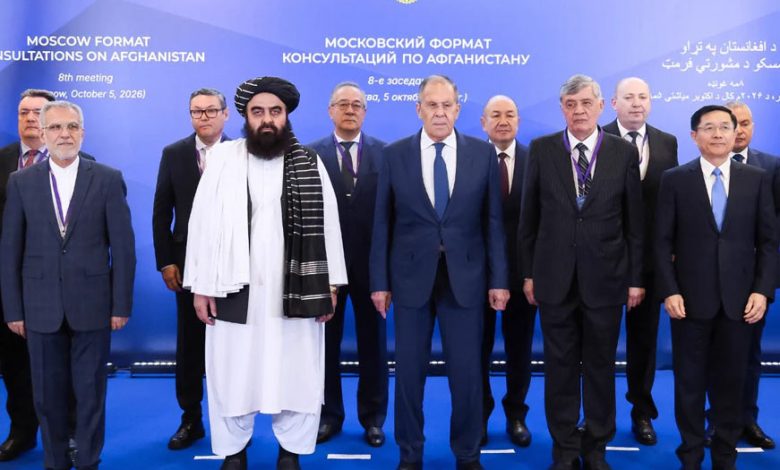
The eighth Moscow Format meeting, attended by representatives from China, India, Iran, Pakistan, Central Asian countries, and a Taliban delegation led by Amir Khan Muttaqi, acting Minister of Foreign Affairs of the Taliban administration, concluded without issuing a joint statement. This outcome reflects the ongoing deep political and security disagreements among regional actors concerning Afghanistan’s fate.
According to India’s think tank Observer Research Foundation (ORF), the disagreements, particularly over the draft final statement that addressed terrorism and security threats related to Afghanistan, led to the failure to reach an agreement. The Taliban delegation considered some parts of the draft to be excessively focused on Afghanistan’s ties with terrorism, whereas the Russian representative emphasized that similar language had been included in last year’s statement. These disputes stem from escalating tensions between the Taliban and Pakistan, with Islamabad accusing the Taliban of failing to prevent activities of armed opposition groups; disagreements persist regarding the Pakistan Taliban’s operations and the Durand Line issue.
Additionally, concerns from Central Asian states, especially Tajikistan, over the presence of extremist groups in northern Afghanistan’s border regions have affected regional relations. Sporadic attacks along the Tajikistan border and activities by armed groups have heightened worries about border security and joint economic projects.
Russia finds itself in a difficult position; on one hand, it has expanded political, economic, and security ties with the Taliban administration, and on the other, it worries about the security of its Central Asian allies. Since removing the Taliban from its list of terrorist organizations, Moscow has increased cooperation to the economic level, including energy trade and transit route development. However, the ORF think tank expresses skepticism about the practical achievements of this Russian policy.
Ultimately, ORF’s analysis underscores that while the Moscow Format provides a platform for dialogue among regional powers, it has so far failed to resolve fundamental political and security challenges and divisions over Afghanistan. The mechanism still lacks a coordinated and unified approach regarding Afghanistan’s future.