Pakistan advances Makkah defence pact without parliamentary vote
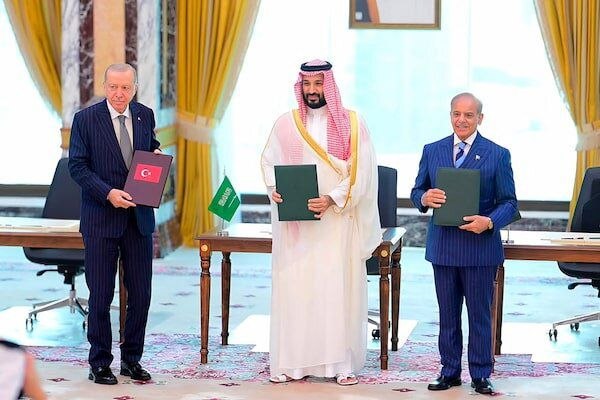
Pakistan has advanced the Makkah defence pact without a parliamentary vote
In an editorial, the newspaper Dawn has warned that pushing ahead with the “Makkah Joint Defence Pact” without public tabling and debate in parliament has increased concerns over transparency and the decision-making mechanism for sensitive security matters in Pakistan.
According to the paper, Islamabad’s approach to the Saudi Arabia-Yemen dispute has changed markedly compared with a decade ago. In 2015, the possibility of Pakistani military participation in the Yemen crisis was brought before parliament and, after a lengthy session, a resolution was issued that, while supporting Saudi Arabia’s territorial integrity, stressed “active neutrality” to help bring the crisis to an end.
But Pakistan’s foreign ministry said in 2026 that signing the new pact and the military commitments arising from it fall within the executive’s authority and do not require parliamentary approval. According to Pakistani analysts, this position represents a significant departure from the 2015 approach and effectively downplays parliament’s role in decisions related to war and peace.
At a news conference, the Pakistani foreign ministry spokesperson pointed to the presence of the defence minister and foreign minister in the “political and defence strategic committee” in an effort to show that the decision-making process is not entirely outside the awareness of official institutions. However, critics ask that if Pakistan’s broad policy has not changed, why is the issue not being taken to the floor of parliament as it was in 2015?
Meanwhile, Dawn noted that Turkey, as the third party to the pact, has referred the agreement to its parliament for review, while Islamabad continues to insist on the government’s “executive authority”.
Analysts say Pakistan’s long-standing presence of military forces in Saudi Arabia cannot replace accountability and transparency over the new pact, especially as the terms and details of the agreement have not yet been made public and it is unclear exactly what form the trilateral military commitments will take.
Dawn wrote that “decision-making behind closed doors by a few ministers can never replace debate and review in parliament,” and that excluding elected representatives from an issue directly tied to national security is not consistent with the principles of transparency. In the view of critics, the main issue is not the principle of Islamabad’s “commitment” to Saudi Arabia, but the process that could draw Pakistan into regional conflicts without the necessary public and parliamentary accountability.