More Than 1.5 Million People in Afghanistan Are Battling Cancer
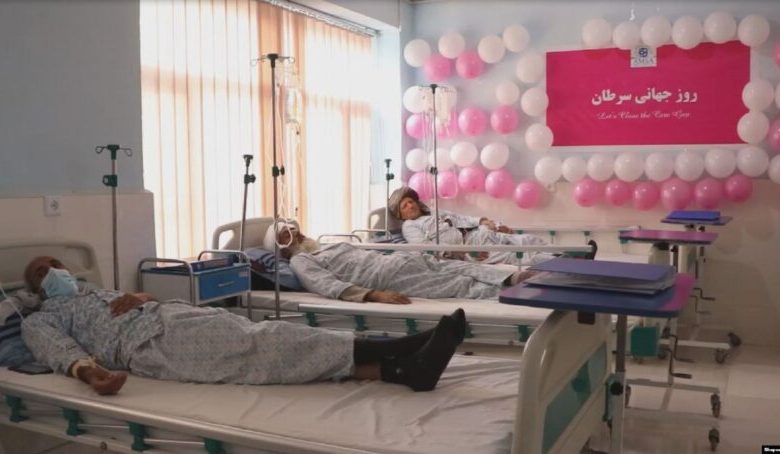
The head of Afghanistan’s Cancer Fighting Foundation says more than 1.5 million people in the country are now living with cancer, a situation that, alongside a shortage of diagnostic and treatment facilities, has raised concerns about public health.
Shafiq Shinwari, the head of the foundation, said, citing data from the Ministry of Public Health and international organisations, that about 50,000 new cases are added to the number of patients every year.
He said many patients are forced to go to private centres because public hospitals lack advanced equipment and specialist capacity. According to him, the high cost of treatment at these centres prevents some patients from accessing medical services.
Shinwari said public hospitals face a serious shortage of facilities such as accurate diagnostic machines, specialised laboratories and stable radiotherapy services. He added that a shortage of essential medicines is another major problem for cancer patients in Afghanistan.
The head of the Afghanistan Cancer Fighting Foundation said that in some cases, essential medicines disappear from the market for weeks and even months, forcing patients to buy them at very high prices. According to him, this delays treatment and places additional psychological and financial pressure on families.
He also said that before the land routes between Afghanistan and Pakistan were closed, many patients went to hospitals in Pakistan for treatment; however, with those routes now shut, pressure on the limited cancer treatment centres inside Afghanistan has increased.
Afghanistan’s Ministry of Public Health previously announced in 2020 that about 23,000 new cancer cases were registered in the country each year and nearly 16,000 of those patients died. Based on national and international estimates, breast and cervical cancer among women, and lung, stomach, prostate and bowel cancer among men are among the most common types of the disease in Afghanistan.