Kabul girls’ letters from secret school highlight impact of Taliban education ban
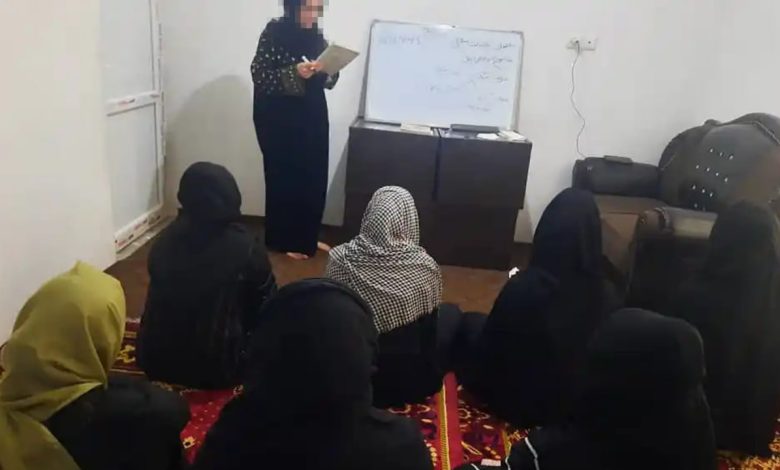
CBS News has highlighted the consequences of the continued ban on girls’ education beyond sixth grade in Afghanistan by publishing several letters from students at a secret school in Kabul. The restriction has forced girls into hidden learning and into lives shadowed by fear of arrest.
According to CBS, reporters from the network were allowed to visit a secret school in a corner of Kabul, where students aged 14 to 16, through handwritten letters, asked the world to hear the voices of women and girls who, they said, could no longer shout.
In one of the letters, a student wrote: “Do you not see Afghanistan? Helpless people who, without any crime, are silently dying in prisons and in the streets and alleys of the city — is this human rights? These are not only my words; they are the words that the people of my country are not allowed to say.”
CBS wrote that the students have asked from outside Afghanistan for help in freeing them from the situation that has prevailed over their lives since the Taliban returned to power. The network added that the students and teachers at the school continue to teach secretly despite serious risks.
According to the report, to stay out of sight of Taliban morality police, students travel wearing conservative clothing and carry nothing but pens and notebooks. Some of them even place pieces of fabric in their bags so that if they are stopped, they can say they have gone out to learn sewing.
One of the girls told CBS: “We are afraid of the Taliban. They may arrest us.” The network stressed that all identifying information about the students and teachers had been removed to protect them.
The main teacher at the secret school is a 25-year-old woman who said she was prevented from continuing her education in her final year of university after the Taliban banned women from studying at universities. “I hold these classes because I do not want these girls to be illiterate or undereducated like women 20 years ago,” she said.
Abdul Qahar Balkhi, a spokesman for the Taliban’s Foreign Ministry, responding to a question about the ban on girls’ education beyond sixth grade, said: “This is a specific type of educational system and academic system and it is currently suspended.” He insisted that this situation “does not mean depriving them of their fundamental right to education.”
However, the accounts of students studying in secret classes present a different picture of the impact of the restriction. One of them wrote in her letter: “I do not want to tell you about my big dreams. I want things that no one should have to dream of having. I want rights: the right to education, the right to work, the right to choose, and the right to build my own future. Is that really asking too much?”
She also added: “World, I want from you a normal life; a life in which having bread is not a dream, working is not dependent on chance, and security and freedom are not fantasies.”
After returning to power, the Taliban suspended girls’ education beyond sixth grade in Afghanistan, a decision that, along with the ban on women studying at universities, is among the broadest restrictions on the right to education for women and girls in the country.