UN Agency Warns Taliban Restrictions Are Reducing Afghan Women’s Access to Healthcare
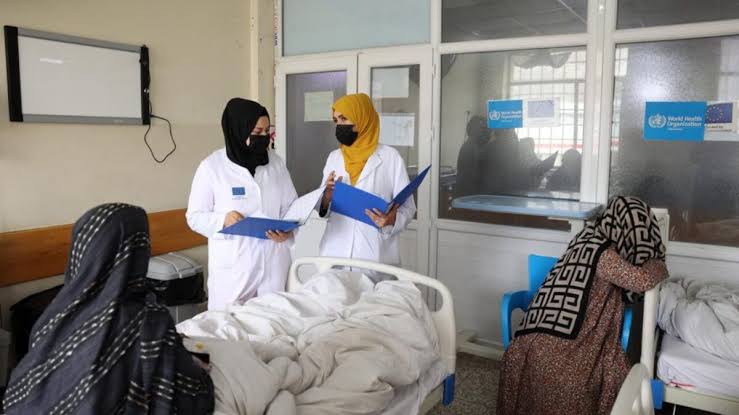
The United Nations Office for the Coordination of Humanitarian Affairs (OCHA) has reported that Afghan women and girls are facing increasing barriers to accessing healthcare services due to restrictions imposed by the Taliban administration and a shortage of resources. The agency warned that if the current situation persists, conditions could deteriorate further, leading to even more limited access to essential care.
According to OCHA, the Taliban’s restrictions on women’s education, employment, and freedom of movement are among the primary drivers of this crisis. The continued ban on girls’ education has raised concerns about a future shortage of female doctors, nurses, and midwives, a factor that directly impacts the health of mothers and newborns.
The United Nations Children’s Fund (UNICEF) estimates that if these restrictions continue, Afghanistan could lose more than 25,000 female teachers and health workers by 2030. This comes at a time when the health sector is already struggling with a shortage of female health personnel, reduced budgets, limited access to essential medicines, and gaps in emergency obstetric care.
OCHA emphasized that women and girls remain among the most vulnerable groups in Afghanistan’s humanitarian crisis, with over 10.7 million in need of humanitarian assistance this year. United Nations statistics show that maternal mortality in 2024 has reached 638 deaths per 100,000 live births, the highest rate in Asia and the seventh highest globally—highlighting the severe strain on the country’s healthcare system.
To illustrate the extent of the crisis, OCHA pointed to the situation in Bamyan province in central Afghanistan. The main hospital in Bamyan is the only facility in the province equipped to provide neonatal intensive care and serves as the ultimate healthcare referral for families living in remote villages.
According to the agency, rural women are forced to travel for hours on rough roads to access emergency childbirth services, and many only arrive at the hospital once serious complications have developed. Healthcare workers at the facility report significant pressure on the hospital’s capacity to maintain essential maternal and newborn services.
Aid organizations have warned that without a revision of the Taliban’s restrictive policies and the provision of sustainable funding for the health sector, the risk of preventable maternal and newborn deaths will remain high.