Taliban Official Says Opponents No Longer Have a Place in Afghanistan
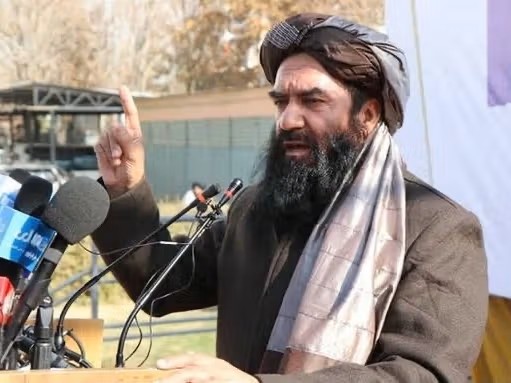
Noorullah Nouri, the Taliban’s Minister of Borders, Ethnicities, and Tribes, declared that individuals who have opposed the group over the past twenty years cannot claim to fight for ‘Afghanistan’s freedom’ and ‘no longer have a place in Afghanistan.’ He said some opponents are attempting to form a new front, but according to him, the current system operates under the rule of Islamic Sharia law.
Nouri, who traveled to Sar-e Pol province, claimed during a meeting with residents of Kohistanat district that the existing regime enjoys popular support and that this backing is not based on ‘force or compulsion.’ He added that people stand with the Taliban administration ‘willingly and consentingly.’
These remarks come amid widespread and systematic restrictions imposed on women, girls, and certain social groups since the Taliban’s return to power. Girls have been barred from education beyond the sixth grade, and many women have been prohibited from working in government offices and NGOs—a move that United Nations officials have warned could lead to the emergence of a ‘lost generation.’
The Taliban’s Minister of Borders also claimed that, under the group’s control, internal conflicts, revenge acts, and wars have ended, and security has been established nationwide. However, recent months have seen reports of rising criminal incidents, including killings and kidnappings, in some areas.
In addition, over the past five years, the Taliban administration has restricted the activities of opposition political parties and movements, and civil protests—particularly in Herat province—have faced harsh crackdowns. International organizations and human rights groups have repeatedly expressed concerns over freedom of expression, human rights, and civil liberties under Taliban rule in Afghanistan.
Some critics believe the Taliban’s current policies and approaches neither align with Islamic teachings accepted by Afghan society nor reflect the country’s cultural and social diversity—a viewpoint that so far has not received a clear or practical response from the administration.