Understanding Iran’s Leadership: Beyond the Figure of Khamenei
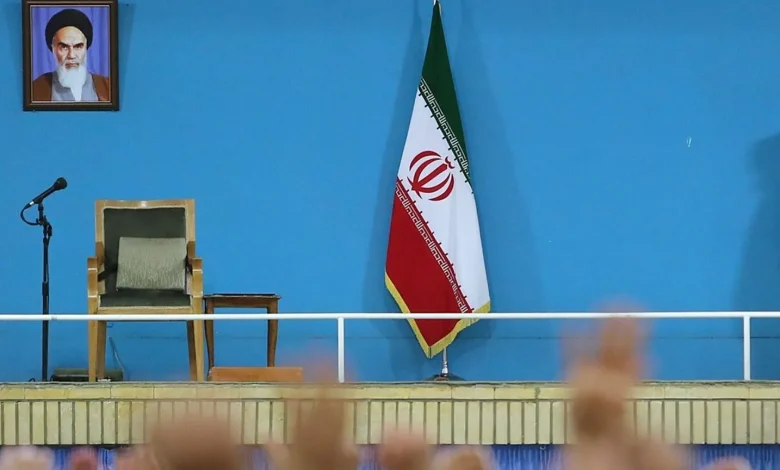
Who leads the Iranian regime? The official and media answer points to one individual: Imam Khamenei (whether alive or martyred). However, this response only clarifies the legal aspect of the issue, not its dynamic reality. On a deeper level, leadership in Iran should be understood not as a person but as a “logic.”
The idea of the “everyone-equal movement” in Ernesto Laclau’s thought removes leadership from the monopoly of an individual and turns it into a shared horizon among actors; a place where every subject, while being a follower, also carries a share of leadership. In this horizon, the “leader” is not merely an individual but a focal point of wills intertwined within the context of a struggle. This logic gains depth and direction in the tradition of the Islamic Revolution through the “duty-based ethics” formulated by Imam Khomeini: “We are tasked with a duty; the outcome is in God’s hands.” Here, political action is liberated from bondage to results and becomes an internal commitment; a commitment that continues even in the absence of guaranteed victory.
The result of fusing these two is a transformation in the meaning of leadership: leadership as a “living network of wills.”
In this network, every actor is both a follower and, to their extent, a leader. Every removal leads not to a void but to multiplication (shards become sharper). Every blow, instead of causing a halt, becomes a continuation of action.
From this perspective, the fundamental error of the imperialist regime and its result-oriented followers, such as Trump, becomes clear: they equate leadership with an individual and tie the survival of the system to tangible outcomes. Therefore, by eliminating or martyring top leadership figures, they expect collapse. But what actually happens in this logic is the opposite. Because in a system based on “everyone-equality” and “duty-based ethics,” leadership cannot be erased; it is distributed, multiplied, and reproduced in every actor.
Hence, resistance (like the current resistance in Iran and Hezbollah) is not dependent on individuals but on the continuation of a living logic: a logic that neither waits for the result nor collapses with absence; rather, it recreates itself on the axis of duty until the last breath.
Ali Faegh