Trump Retreats from Energy Infrastructure Strikes, Signaling Strategic Setback for US in Middle East
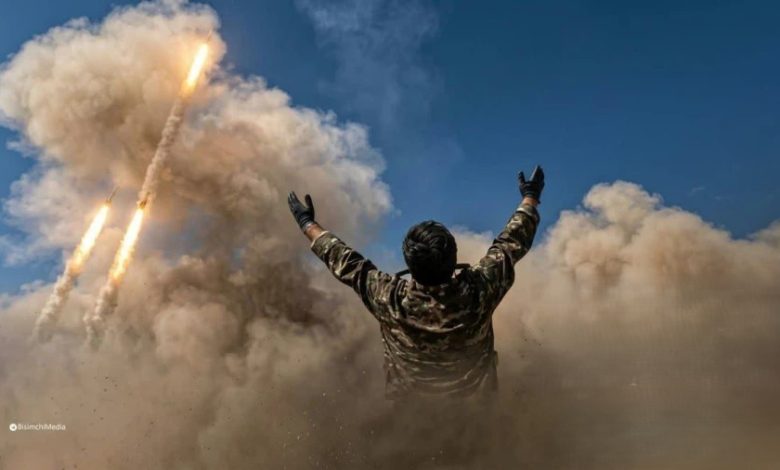
Trump’s withdrawal from attacks on energy infrastructure and his announcement that such incidents will not happen again is not merely a tactical decision but a practical admission of the failure of his initial calculations.
The red line that was supposed to force Iran to retreat has now become a boundary that even the United States dares not approach.
In the 12-day conflict, I wrote in a note titled “The Madman’s Policy” that Trump and Netanyahu entered the arena with this tactic to intimidate Iran. However, they themselves now face this policy from Iran and seem to be in a state of shock. What unfolded on the battlefield was contrary to their expectations.
The reality of the battlefield contradicts media narratives; Iran has not only avoided a position of weakness but has succeeded in changing the rules of the game.
In asymmetric warfare, the winner is not determined by tweets or press conferences but by who can impose greater costs on the opponent on the ground. So far, Iran has successfully imposed higher costs on its adversaries.
The US and Israel entered the conflict with the assumption that a limited strike would stabilize the equation in their favor. Now, they face a situation where each next step is more costly and risky. This precisely illustrates their strategic error: entering a game much harder to exit than to enter.
For the US, losing billions of dollars’ worth of military equipment in regional bases is less significant than the collapse of the main pillar of its regional hegemony—the “credibility of its deterrence.”
If this credibility falls apart, the entire US security architecture in West Asia will be questioned. Subsequently, it is unlikely that Arab countries will continue to serve as mere “cash cows” for Trump.
Meanwhile, the Strait of Hormuz has become a decisive lever in the conflict.
Any level of tension at this energy chokepoint immediately shocks global markets. This means the battlefield is no longer confined to the region’s geography but extends to the global economy, which precisely strengthens Iran’s hand.
Market reactions to the conflict’s developments are always a key factor in determining which side holds the upper hand in managing the battlefield.
Rising energy prices and the inability of the US and Israel to control them indicate that classic crisis management tools no longer work as they once did for the US.
At this point, the issue is not merely military; it concerns controlling a complex chain of global economics, security, and politics, which could even neutralize options such as lifting sanctions on oil purchases from Iran.
Obviously, Iran does not participate in this confrontation without cost, but the crucial difference is that instead of pushing Iran back, the conflict gradually expands Iran’s leverage to pressure its adversaries through dozens of countries affected by financial market instability.
Wealthy nations and global economic powers, not for Iran’s sake but to save themselves from the crisis, will be compelled to pressure the US and Israel to end the war and effectively recognize the new regional order Iran seeks.
The continuation of the war at the current pace means a gradual but profound erosion of US standing in the region—a process that will certainly lead to the emergence of new global power poles.
If Iran can maintain control over vital energy arteries in the Strait of Hormuz and the Bab-el-Mandeb Strait, then a real shift in the balance of power is underway.
Iran seeks an end to US presence in the region, and if it can link the reduction of US regional presence with securing energy transit routes, it will have succeeded in establishing the new order it desires and paved its way to join the ranks of superpowers.
All current signs indicate that the dynamics of this war are increasingly shaping against the US and Israel rather than against Iran.
Seyed Ahmad Mousavi, Contributor