FAO: 3.7 Million Children in Afghanistan Face Acute Malnutrition
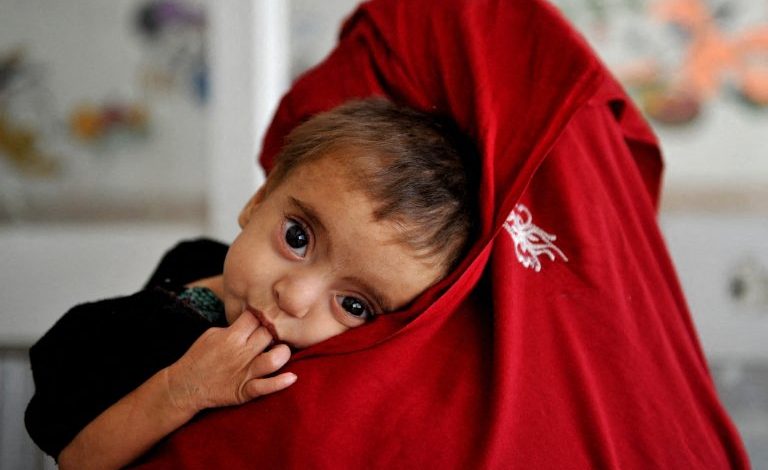
The United Nations Food and Agriculture Organization (FAO) has warned that 3.7 million children aged six to 59 months in Afghanistan will face acute malnutrition in 2026, stressing that containing the crisis is impossible without greater investment in prevention.
In a report released today, Wednesday, 18 September, the FAO said current nutrition programmes in Afghanistan are focused mostly on treating severe cases and immediate contributing factors. According to the agency, this approach is not enough to stop the repeated cycle of malnutrition, because children remain at risk of falling ill again even after treatment.
The report said that sustainable reduction of the crisis requires addressing the underlying factors in livelihood systems, which expose children to malnutrition in different seasons. The FAO cited access to food, income from agriculture and livestock, women’s roles and workload, and risks related to the One Health approach as among these factors.
The agency said understanding the link and interaction between these variables and children’s nutritional status is essential for designing effective preventive strategies. The FAO added that access to food alone is not sufficient to prevent acute malnutrition.
The FAO report said Afghanistan is facing one of the most severe nutrition crises in the world. The organization stressed that despite years of humanitarian aid and efforts to improve household food security, these measures have not consistently led to better nutrition among young children.
About a month ago, John Ayliffe, the World Food Programme’s director in Afghanistan, also said the country’s malnutrition crisis had spiralled out of control. He added that child wasting, described as the deadliest form of malnutrition, has now reached critical levels in one-third of Afghanistan’s provinces.
According to him, funding shortages have sharply reduced the ability of aid agencies to respond, and the World Food Programme this year has budget only to feed one in every seven people affected by malnutrition. He called on countries that have suspended aid to Afghanistan to resume their support to address the crisis.
The Integrated Food Security Phase Classification is one of the main tools used to assess hunger and malnutrition crises in countries. In recent years, Afghanistan has repeatedly been identified in UN reports as one of the world’s main food crisis hotspots, due to widespread poverty, reduced livelihood capacity among families and heavy dependence on humanitarian aid.