Political Leaders Mark Ahmad Shah Massoud Anniversary, Hail His Legacy
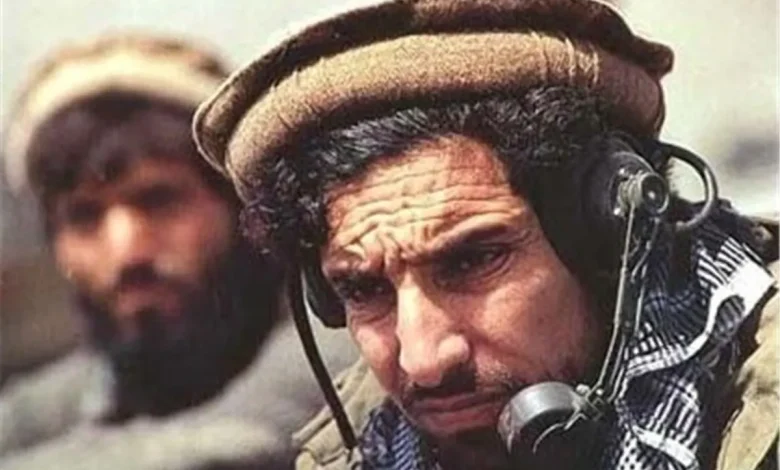
On the 25th anniversary of the assassination of Ahmad Shah Massoud, a number of former government officials and political leaders issued messages describing him as a symbol of resistance against tyranny and stressing the need to follow his struggle.
In their messages, these figures linked Massoud’s political and military legacy to the need for solidarity, struggle and the return of civil liberties. Some of the messages also emphasised the right of Afghan girls and boys to education.
Ata Mohammad Noor, one of the leaders of Afghanistan’s Jamiat-e Islami party, described Ahmad Shah Massoud as an “unrivalled and irreplaceable icon of jihad and resistance” and “a figure of value and a school of thought.” He said commemorating Massoud should not be limited to “superficial imitation, wearing a pakol and tying a scarf around the neck,” and that his supporters should take his personal and combat qualities as their model.
Fazl Ahmad Manawi, justice minister in the former government, also described Massoud as “a tall man, full of faith, pride and courage.” In his message to the citizens of Afghanistan, he wrote that “the dark night has an end” and expressed hope that Afghan girls and boys would once again return freely to schools and universities.
Abdullah Abdullah, former chairman of the High Council for National Reconciliation, called Ahmad Shah Massoud a “honest and selfless” figure who, he said, put collective interests above individual, group and ethnic demands. He added that Massoud saw division and a lack of trust among ethnic groups as factors in collective failure and worked to create unity and consensus among Afghanistan’s ethnic communities.
Former Afghan President Hamid Karzai also stressed that Massoud deserved respect because of his “jihad, efforts for the freedom of the country and presence among the people.” Former Afghan foreign minister Hanif Atmar likewise wrote that the legacy of his struggle and sacrifice for the freedom of the homeland, and his belief in the unity of the people, holds enduring lessons for today’s and future generations.
Ahmad Shah Massoud was assassinated on 18 September 2001 in Khwaja Bahauddin district of Takhar province in an attack by two assailants. Before that, he had fought against the Soviet army and later against the Taliban administration, and is considered one of the most influential and controversial figures in Afghanistan’s modern history.
Massoud was born on 11 September 1953 in the Jangalak area of Panjshir and served as Afghanistan’s defence minister during Burhanuddin Rabbani’s government. Later, at the 2004 constitutional Loya Jirga, he was given the title of “National Hero of Afghanistan.”