Badakhshan border video highlights development gap between Afghanistan and Tajikistan
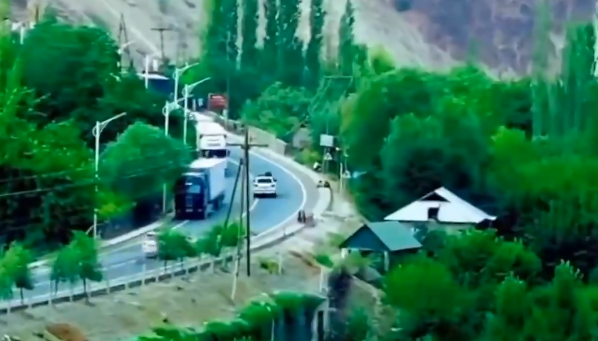
A video circulated on social media has highlighted the stark difference in infrastructure and living conditions on either side of the Afghanistan-Tajikistan border along the Panj River, a contrast that has drawn renewed attention on the fifth anniversary of Kabul’s fall and the return of Taliban rule.
In the video, paved roads and orderly settlements are visible on the Tajikistan side, while on the Afghanistan side the roads are dirt tracks and uneven. Social media users have described the images as evidence of a deep gap in development and living conditions on both sides of the border.
At the same time, users have also pointed to differences in the rights and freedoms of women and girls. In Tajikistan, women and girls continue their education and work without restrictions, but in Afghanistan the Taliban administration has deprived women and girls of a large part of their basic rights, including education and work.
The text accompanying the video also says the Taliban administration has increased gold extraction in Badakhshan but has paid little attention to infrastructure projects, including the construction and asphalting of highways. The claims come as the lack of infrastructure in many parts of Afghanistan remains one of the main problems affecting mobility and people’s access to services.
The Panj River forms part of the natural border between Afghanistan and Tajikistan, and Badakhshan province is one of the most important border regions in northeastern Afghanistan, an area where the long-standing shortage of standard roads and public infrastructure has for years been among the serious challenges facing residents.