UNDP chief warns neglecting Afghanistan could have severe consequences
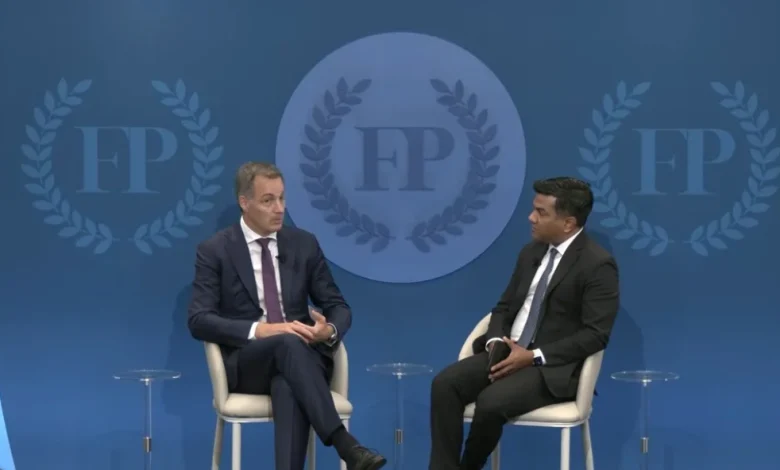
Alexander De Croo, head of the United Nations Development Programme, has warned that turning away from Afghanistan could have serious consequences over the next five to 10 years.
In an interview with Foreign Policy magazine, he said that despite disagreements with the Taliban administration, the international community has no choice but to engage with Afghanistan, a country he said is simultaneously grappling with economic, climate and humanitarian crises.
De Croo said Afghanistan is facing an economic contraction of nearly 20 percent, the effects of climate change and natural disasters, tensions with neighbouring countries, and the return of nearly five million migrants from Iran and Pakistan over the past year and a half.
According to him, when a country’s population rises by 12 to 15 percent in a short period because of the return of migrants, managing that pressure is not easy for any country, and Afghanistan needs support from the international community to cope with it.
The UNDP chief also stressed that the international community should use its aid and support for Afghanistan as leverage to advance the rights of women and girls and strengthen civic space.
He described the ban on education for girls above the age of 12 in Afghanistan as “completely unacceptable” and added that excluding half the population from education is also a poor policy from a development perspective.
De Croo said Afghanistan needs the capacity of all its people to overcome its wide-ranging problems, and denying girls access to education means failing to use the talent and abilities of half the population.
He also said the UN Development Programme works in women’s entrepreneurship and has helped tens of thousands of women launch small businesses. According to De Croo, the agency raises the issue of women’s and girls’ rights with the Taliban administration almost every day.
The United Nations Development Programme (UNDP) is one of the UN’s specialized agencies that works in different countries to reduce poverty, promote sustainable development and strengthen economic and social capacity. In Afghanistan, part of its work has focused on livelihoods and the resilience of families.