WHO Reports Over 59,000 Cases of Hepatitis B and C in Afghanistan in 2025
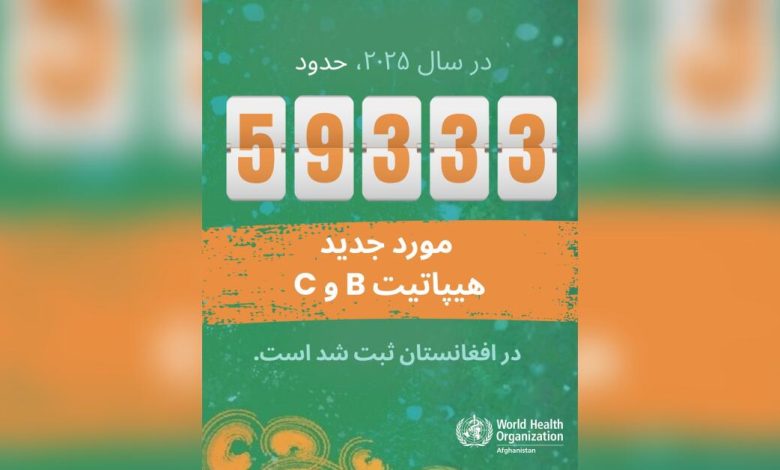
The World Health Organization (WHO) states that the hepatitis virus continues to affect the health of thousands in Afghanistan, with 59,333 cases of hepatitis B and C recorded or estimated in the country in 2025 alone.
On Tuesday, July 27, marking World Hepatitis Day, the agency released information emphasizing that increasing public awareness, expanding access to diagnostic and treatment services, and strengthening preventive measures are essential steps toward reducing new infections.
However, the WHO did not provide statistics on the total number of people living with hepatitis in Afghanistan.
According to the organization, hepatitis B and C viruses are transmitted when the blood or other bodily fluids of an infected person enter another person’s body. High-risk groups include drug users who share needles, prisoners, individuals exposed to unsterilized medical equipment, and those engaging in unprotected sexual contact.
Additionally, hepatitis B can be transmitted from infected mothers to their newborns. The disease is regarded as one of the deadliest worldwide, with public awareness levels assessed as low.
Hepatitis viruses are classified into five types: A, B, C, D, and E. In Afghanistan, types B and C are most commonly known as “black jaundice.”