UN Report: Afghanistan’s Opium Production Drops 95%, Impacting Global Drug Markets
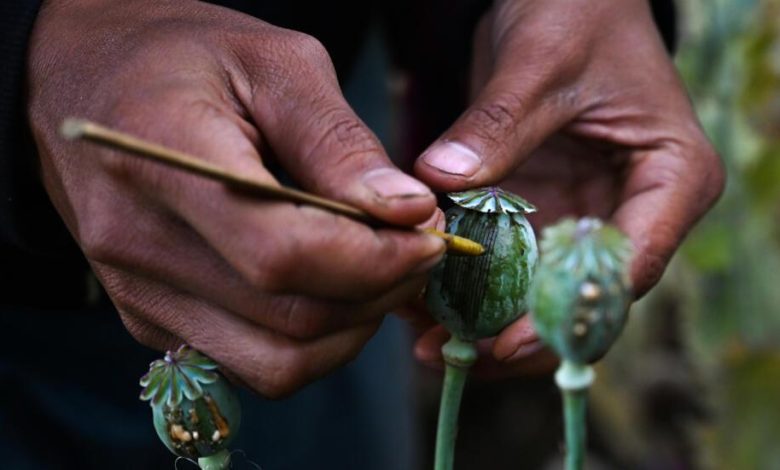
The United Nations Office on Drugs and Crime (UNODC) stated in its 2026 World Drug Report that Afghanistan’s opium poppy production has decreased by 95% since 2023. According to the agency, this significant decline has notably affected the global opioid market.
The report describes this unprecedented drop as a turning point in the dynamics of the global opioid market. Based on UN assessments, the sharp reduction in Afghan production has led to a gradual depletion of heroin reserves, forcing trafficking networks to seek new alternatives.
The report adds that the increased availability of synthetic opioids such as fentanyl, nitazenes, and U-47700 indicates traffickers are attempting to offset heroin shortages caused by decreased production in Afghanistan. This trend could bring about persistent and worrying changes in global drug supply and consumption patterns.
Although opium production in Myanmar rose from 420 tons in 2021 to over 1,000 tons in 2025, with increases also recorded in countries like Laos and Mexico, the UN emphasized that these amounts have not compensated for the shortfall caused by the decline in Afghan production. In 2022, Afghanistan produced over 6,000 tons of opium and played a central role in supplying the global market.
The reduction in poppy cultivation followed the Taliban’s ban on opium farming, a move that received widespread global attention. However, several experts have continuously warned that without sustainable livelihood alternatives for farmers in impoverished provinces, maintaining this situation will bring serious economic and social challenges for local residents.
The United Nations has warned that if the trend continues, it could transform the global patterns of opioid production, trafficking, and consumption, leading to significant consequences for public health, security, and efforts against organized crime.