Why Did the Taliban Dare to Target Khatam al-Nabiyyin?
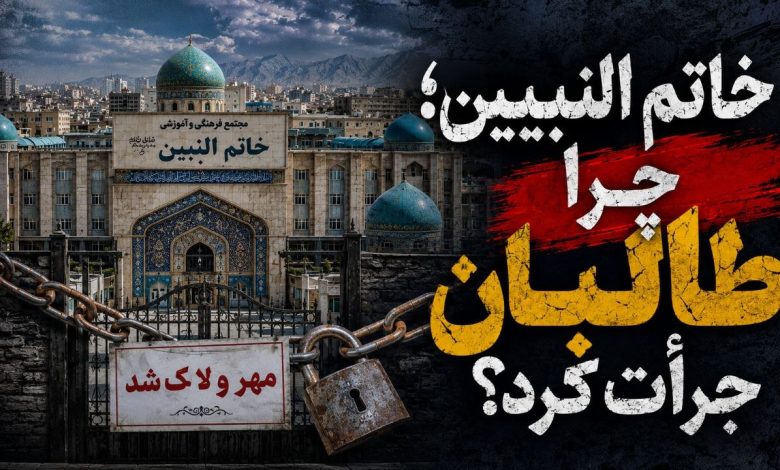
Khatam al-Nabiyyin Seminary and all related institutions, from the university to Tamaddon TV, should have been “the Shia house”—a part of the public assets of Afghanistan’s Shia community, while also serving the entire Afghan population.
In my view, the first spark for the Taliban’s aggression against Khatam al-Nabiyyin was ignited when they felt they were dealing with private property, not with an asset that the Shias of Afghanistan consider their own.
Had the Taliban believed that encroaching on Khatam al-Nabiyyin would provoke public anger among Shias and be seen as an attack on their material and spiritual assets, they would never have taken such a bold step. The mistaken actions of the seminary’s leadership and its board of trustees created the conditions for this perception.
Nevertheless, Khatam al-Nabiyyin and its affiliated institutions are among the most important material and spiritual assets of Afghanistan’s Shia community, and no one should dare covet them.
If the Taliban manage to swallow a chunk as large as Khatam al-Nabiyyin, their throat will become so wide that swallowing the next pieces will be easier than drinking a sip of water.
The attack on Khatam al-Nabiyyin and the attempt to seize it is a continuation of the Taliban’s anti-Shia policy. This group has targeted the capacities of Afghanistan’s Shias one after another.
The closure of Khatam al-Nabiyyin essentially means the closure of the Shia Scholars Council as well, since its headquarters are located within this complex. With this move, the Taliban have even targeted the faction that had been engaging with them.
But there is an important question. In a situation where the Islamic Republic of Iran sees itself as a powerful actor after the recent war, and the Shias—and even many non-Shia groups—in the region openly stood alongside Iran, how do the Taliban dare, on the day of Ashura, to attack the Shias of Afghanistan as Iran’s strategic allies and their most important material and spiritual assets?
The answer must be sought in several points. The solidarity of Afghanistan’s Shias with Iran during the days of war—in Afghanistan, Iran, and Europe—provoked the anger of Salafi currents tied to the US. Pressure on the Shias is effectively pressure on Iran’s friends and allies to weaken the social bases of opposition to anti-Iranian policies in the future.
Unfortunately, a wrong move by Tehran has increased the Taliban’s boldness. The reinstatement of the former deputy ambassador to his post, who was the main supporter of the policy backing the Taliban in Tehran, sent a signal to the group that putting pressure on the Shias would not provoke Tehran’s anger.
Through his misguided policies over several years, the deputy ambassador emboldened the Taliban to weaken the Shia and Persian-speaking communities—who are in fact strategic capacities for Iran in Afghanistan—one after another, and his return to the mission is perceived as a signal to continue this trend.
Now, two things must happen. First, protesting the confiscation of Khatam al-Nabiyyin must become a public demand. Internal differences among the Shias should not make it easier for the Taliban to swallow this large asset. If the Taliban manage to solidify the seizure of Khatam al-Nabiyyin, tomorrow, through similar fabrications, other Shia assets will be next.
Second, the Islamic Republic of Iran must, just as it steadfastly supported Lebanon, clearly define its relationship with its Shia and Persian-speaking allies in Afghanistan and stand firm on its red lines regarding them.
Iran can engage with the Taliban; however, if this engagement comes at the cost of losing its main allies in Afghanistan, Taliban-controlled Afghanistan will become one of the crisis centers against Iran.
If Iran wants to keep Afghanistan safe for itself, that security, as the martyred leader said, passes through strengthening and preserving the social base aligned with the Islamic Republic, not through dealings with the ruling powers.
If Afghanistan’s Shias and Persian-speakers feel unsupported by Iran during critical moments, they will lose the motivation to stand with Iran in difficult days ahead.
And a recommendation to the trustees of Khatam al-Nabiyyin: winning a legal battle against a regime like the Taliban is almost impossible. The most important way to preserve public assets is for the people themselves to feel ownership.
As long as these centers are considered private property rather than the people’s assets, there will be no motivation to defend them. If the people confront the Taliban, this group will never dare to seize such institutions. Therefore, reconsider your approach, regard the people as the real owners of this complex, assign them a role and position, and give them the chance to defend an asset they consider their own.
Seyed Ahmad Mousavi, Preacher