Former UN Rights Chief: Global Pressure Has Victimized Afghan Women
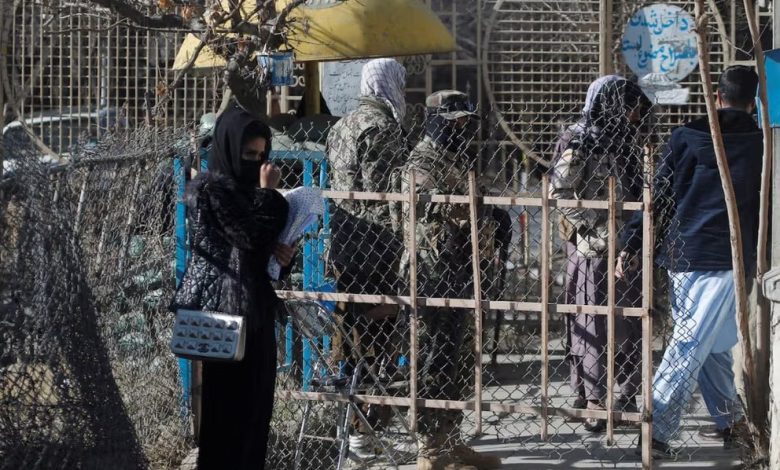
Nora Niland, former head of the human rights section for the United Nations Assistance Mission in Afghanistan (UNAMA), has stated that the punitive policies of international actors following the Taliban’s return to power have placed ordinary citizens, especially women and girls, under immense pressure rather than changing the Taliban’s behavior. Niland emphasizes that the focus on economic pressure and aid suspension has led to widespread poverty and profound social harm.
In an article published by SwissInfo, Niland writes that the global community has on one hand engaged minimally with the Taliban administration, while simultaneously imposing severe economic restrictions, effectively targeting the Afghan people with what she calls an “economic war.” She argues that this approach has resulted in “artificial poverty,” a condition caused not only by conflict but also by external political and economic decisions.
The analysis highlights that the freezing of billions of dollars in Afghanistan’s foreign reserves and extensive limitations on the central bank have weakened the backbone of the country’s economy. The central bank’s inability to manage liquidity, control inflation, and maintain the national currency’s value has disrupted the entire financial system, suffocating the economy. The outcome of this situation has been a commercial recession, rising unemployment, and a sharp decline in the purchasing power of the Afghan people.
Niland describes this situation as a “collective punishment policy,” stating that instead of targeting the power structure, the entire population has been affected. She notes that vulnerable groups have suffered the most.
The report also references the closure of over 420 healthcare centers in the past year, a factor which has restricted millions’ access to medical services and contributed to increased maternal and infant mortality rates. According to a United Nations report, 90% of households, including those headed by women, have resorted to harmful coping mechanisms to survive.
The analysis further stresses that the Taliban’s harsh policies—including the ban on girls’ education, restrictions on employment, and control over women’s presence in public life—have deprived women of their fundamental rights. The author believes these limitations, based on a particular interpretation of social norms, have deepened historic discrimination against women.
Niland writes that external economic pressures and internal Taliban restrictions mutually reinforce each other, leading to increased poverty, dependency, and marginalization among women and girls, while diminishing their resilience and capacity to cope.
Meanwhile, the wave of Afghan migrant expulsions has exacerbated the humanitarian crisis. The report states that the forced return of approximately 5.4 million people from Pakistan, Iran, and Europe has disrupted remittance flows and heightened economic pressure on families.
Furthermore, the sharp reduction in humanitarian aid, according to this former UN official, has brought even emergency support mechanisms for vulnerable populations to the brink of collapse. She warns that the continuation of these policies could deepen the humanitarian crisis and result in greater casualties among at-risk groups.
In conclusion, Niland stresses that this approach has neither changed the Taliban administration’s behavior nor improved conditions, but has instead exposed the Afghan people—especially women and girls—to deeper poverty and broader social exclusion.