Conflicting Narratives on Afghanistan’s 1978 Coup Anniversary and Taliban’s Sharp Response
Today, Monday, 7th of Sowr, marks the 48th anniversary of the 1978 coup in Afghanistan, an event that led to the overthrow of the republic under Sardar Mohammad Daoud Khan and fundamentally transformed the country’s power structure. Many contemporary historians consider this day as the beginning of a period marked by political instability, foreign interventions, and prolonged wars in Afghanistan.
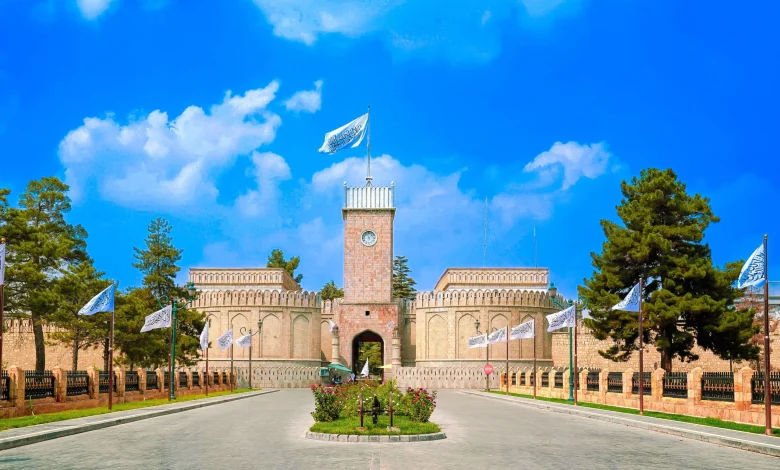
On 7th Sowr 1357 (1978), the People’s Democratic Party of Afghanistan (PDPA), supported by elements within the army and backed by the Soviet Union, staged a coup against Daoud Khan’s government. Intense fighting broke out in Kabul, with the Presidential Palace and several key government centers subjected to attacks by tanks and fighter jets. As a result, Sardar Mohammad Daoud Khan, Afghanistan’s first president, along with several family members, was killed inside the palace.
Following the fall of the republic, the PDPA seized power and introduced Nur Mohammad Taraki as head of state. The new government announced wide-ranging political, economic, and social reforms, including land reforms and changes in the educational system. However, these policies faced strong opposition from various segments of society, notably traditional and religious groups.
Historical reports indicate that the suppression of opponents, mass arrests and executions, along with internal divisions within the party, exacerbated the political crisis. This ultimately led to the Soviet Union’s military intervention in late 1979, which triggered a nearly decade-long war causing severe human and economic losses for Afghanistan.
After Soviet forces withdrew in 1988, Dr. Najibullah’s government continued until 1992 before collapsing, at which point power fell to Mujahideen factions. However, infighting among these groups sparked violent civil conflicts in Kabul and other areas, inaugurating a new cycle of instability.
Today, the Taliban administration issued a statement describing the 7th of Sowr coup as the groundwork for ‘Afghanistan’s occupation and the imposition of communist ideology,’ and referred to the 8th of Sowr as the ‘day of Mujahideen victory.’ Yet critics argue that politically exploiting historical events without accepting responsibility for ensuing wars and crises does little to clarify the truth or heal the historic wounds of the Afghan people.
Over the past four decades, narratives surrounding the 7th and 8th of Sowr have remained deeply contested. Some view these days merely as the change of a political regime, while others see them as the start of a chain of violence, foreign interventions, and civil wars whose consequences continue to overshadow Afghanistan’s political and social landscape today.