Pakistan’s Share in Afghanistan Transit Falls Sharply, Report Says
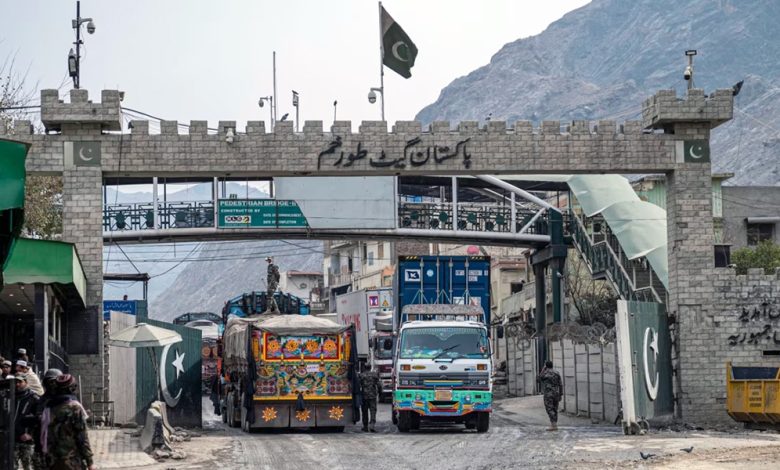
Pakistan’s dependence on Afghanistan’s trade route is declining, and the sharp drop in transit through the country has challenged Pakistan’s traditional role as Afghanistan’s main gateway, the Pakistani newspaper Dawn said in an analytical report.
According to the report, the movement of Afghanistan’s transit goods through Pakistan, which before the Taliban returned to Kabul stood at nearly 89,000 containers worth about $5 billion, rose to 102,886 containers worth $6.7 billion in fiscal year 2023. But after that, the trend turned sharply downward.
Dawn said the number of Afghanistan’s transit containers fell to 54,114 in fiscal year 2024, to 42,959 in fiscal year 2025, and to 11,592 in fiscal year 2026. The value of that figure in fiscal year 2026 was reported at about $367 million.
The newspaper added that Pakistan’s border restrictions in October 2025 did not start this decline, but accelerated a reduction that had already begun. According to Dawn, the shift shows that alternative routes are gradually replacing Pakistan’s traditional corridor.
The report said Iran has become the most important alternative route for Afghanistan’s trade in recent years. A World Bank report cited by Dawn shows that Iran accounted for about 31.3 percent of Afghanistan’s imports in fiscal year 2025, and direct imports from Iran, together with goods transited through this route, made up 48.6 percent of Afghanistan’s total imports.
Dawn also wrote that Central Asian routes have gained greater importance, a development that could further weaken Pakistan’s position in Afghanistan’s access to international markets. According to the newspaper, the decline in transit trade not only damages Pakistan’s customs revenues, but also affects manufacturers, wholesalers, transport companies, warehouses and customs agents, especially in Khyber Pakhtunkhwa.
The report further said Afghanistan’s exports through Pakistan to third-country markets have suffered an even steeper decline. The figure fell from $454 million in fiscal year 2025 to just $7 million in fiscal year 2026.
Dawn warned that falling demand from the Afghan market is putting pressure on the economy of Khyber Pakhtunkhwa at a time when the province’s industries are also facing high energy, transport and financing costs. The newspaper added that the closure or congestion of the Torkham and Chaman crossings also inflicts heavy losses on traders on both sides, especially for fruit and vegetables, because of their perishable nature.
The report concluded that continuing this trend would be harmful for both countries: Afghanistan would face higher transport costs along longer routes, while Pakistan would lose part of its port activity, transport, warehousing and customs services. Dawn suggested that Kabul and Islamabad move toward a predictable, transparent and rules-based transit system to prevent further losses.
Khyber Pakhtunkhwa and the city of Peshawar have been among the most important centres of movement and trade with Afghanistan for several decades, and the Torkham and Chaman crossings are considered key routes for the transport of goods between the two countries.