UNICEF says 2.6 million girls in Afghanistan remain barred from education
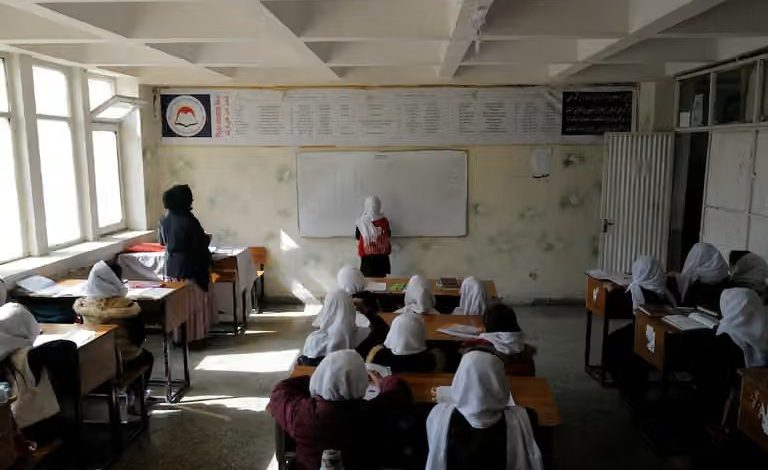
The United Nations Children’s Fund (UNICEF) has said that since the Taliban returned to power, at least 2.6 million girls in Afghanistan have remained deprived of education beyond primary level, a situation the agency says has increased their risk of early marriage, gender-based violence and abuse.
In a statement on Saturday, Aug. 24, marking the fifth anniversary of the Taliban’s return, UNICEF said Afghanistan is now the only country in the world where education beyond sixth grade is banned for girls and women. The agency stressed that the educational ban has also cut girls off from one of the most important layers of social protection.
Catherine Russell, UNICEF’s executive director, said five years may seem like a short period in a country’s history, but in a girl’s life it is a defining time. She added that school is not only a place for learning, but for adolescent girls it provides a setting for growth, safety and access to future opportunities.
According to her, schools can play a protective role against early marriage, violence, abuse and children being pushed into labour. UNICEF says that protection has been taken away from girls precisely when they have needed it more than ever.
The agency said in its statement that poverty and displacement have also intensified the threats facing adolescent girls. UNICEF reported that since 2023, more than 2.7 million migrants have returned from Iran and Pakistan, 60% of them children and adolescents.
UNICEF warned that the consequences of the ban are not limited to the girls directly excluded from education. The agency estimates that by 2030 Afghanistan could lose 20,000 female teachers and 5,400 health workers.
In an analytical report published in April, the agency also estimated that the Taliban’s education ban costs Afghanistan $84 million a year. According to UNICEF, if these restrictions continue, the losses will grow each year.
UNESCO also said in August last year that at least 2.2 million children had been denied secondary education as a result of the education bans. Despite these restrictions, UNICEF said it supported the education of 3.7 million children in government schools in 2025 and included 442 children in community-based education programmes, 66% of whom were girls.