Lowy Institute Says Taliban Are Rebuilding Afghanistan’s Education System Around Ideology
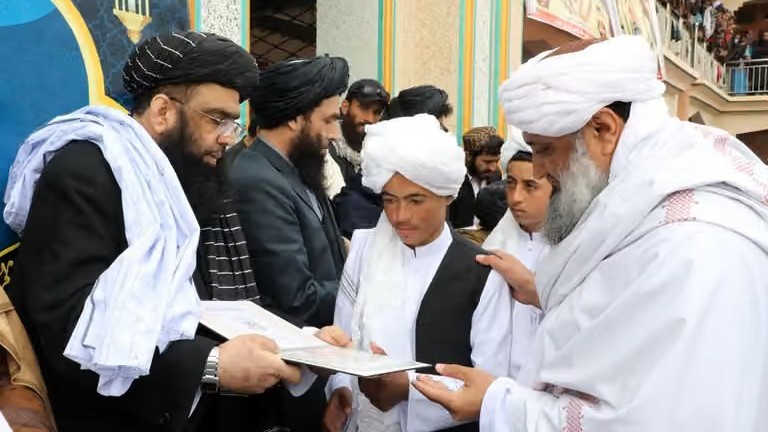
The Taliban administration is fundamentally rebuilding Afghanistan’s education system around its own ideology while continuing to bar girls from schooling, according to a new report by the Lowy Institute, an Australian international affairs research body. The institute warned that this process could erase much of the character of Afghanistan’s former education system, even if girls’ schools are eventually reopened.
The report, written by journalist and analyst Lyn O’Donnell, says that five years after the Taliban returned to power, girls remain barred from education beyond grade six and university, while women are also prohibited from working and participating in social sectors. It stresses that these restrictions are only part of broader changes to Afghanistan’s education structure.
According to findings by the civil society group Hamraah Network, cited in the report, the number of registered religious schools in Afghanistan has risen from about 5,000 during the republic period to more than 23,000. The report says more than 3.6 million children and adolescents are now studying in these schools.
The Lowy report adds that the Taliban administration has converted a number of public schools, universities and teacher training centres into religious schools. For girls who have been denied secondary and higher education over the past five years, enrolment in girls’ religious schools has effectively become the only educational option, it says.
Elsewhere in the report, the new curriculum is said to focus on memorising the Quran, hadith, conservative Hanafi jurisprudence and political instruction approved by the Taliban administration. It also says a book titled “Lessons of Jihad” is taught in some schools, and that some officials of the administration have called for military and jihadist concepts to be included in children’s education.
The report also examines the social consequences of these changes, saying the Taliban administration seeks to place loyalty to itself above family ties. According to some parents who told researchers, they pulled their children out of these centres after learning that boys were encouraged at school to report on family members.
In one part of the report, a Taliban intelligence official is quoted as telling a resident of Kandahar: “Be aware that we now have informants in each of your houses.” The report’s author said this was evidence of an effort to control minds and expand social surveillance through the education system.
In its conclusion, the Lowy Institute says the Taliban administration is seeking to supply personnel for its religious, judicial and security institutions by graduating millions of young people from jihadist schools. The institute says that while global attention has focused mainly on the repression of women, quiet but profound changes in education could have a long-term impact on the future of Afghanistan’s next generation.
The Lowy Institute is an Australia-based research organisation focused on foreign policy and regional and global developments. Education in Afghanistan is regarded as one of the most influential institutions shaping the country’s social structure and political future.