FAO Warns Rising Fertilizer Prices Threaten Afghanistan’s 2027 Wheat Harvest and Food Security
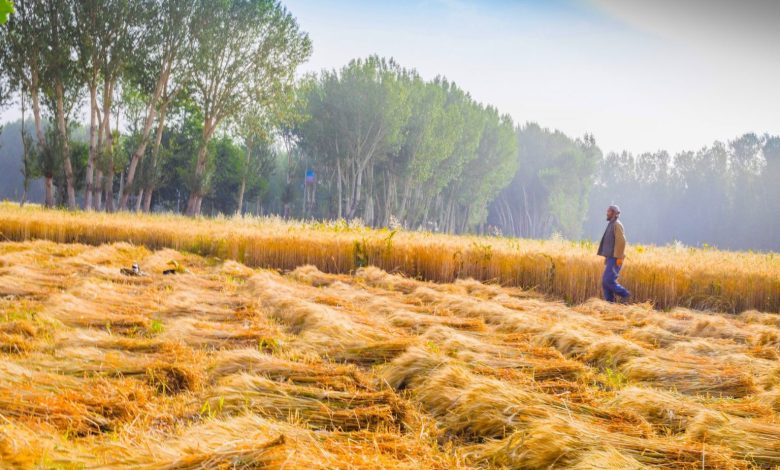
The United Nations Food and Agriculture Organization (FAO) has warned that the sharp increase in prices of chemical fertilizers on global markets could seriously reduce Afghanistan’s wheat harvest in 2027, impacting the food security of millions.
According to the agency, disruptions caused by the Middle East crisis have driven fertilizer prices up, hitting Afghan farmers hardest. Wheat production in Afghanistan’s low-yield soils depends heavily on sufficient supplies of diammonium phosphate (DAP) and urea fertilizers.
FAO cautions that rising fertilizer costs may force farmers to cut back on fertilizer use or reduce the area under cultivation. Such measures would ultimately lead to lower production, food shortages at the household level, and increased indebtedness among farming families.
The organization further highlighted that female-headed households, returnees, and rural communities—already struggling with food insecurity and economic challenges—are the most vulnerable groups to the consequences of this crisis.
Richard Trenchard, FAO’s representative in Afghanistan, said that after a difficult drought year, farmers had hoped for a better season, but the spike in fertilizer prices has taken that chance away from many needy families. He emphasized that the main problem is not supply shortage but farmers’ inability to afford fertilizer costs at a critical point in the agricultural calendar.
Several farmers have shared their difficulties. Din Mohammad, a farmer from Nimroz province, said that while he previously purchased fertilizer on credit, this option is no longer available, and without fertilizer, he cannot expect any profit from his land. Another farmer from the same province, Wakil, said he is torn between meeting his family’s needs and buying seeds and fertilizer.
FAO has appealed for $38.3 million in funding to provide improved seeds and fertilizers to 600,000 families. The agency plans to deliver assistance through targeted subsidies, biometric registration of farmers, and distribution of electronic vouchers in cooperation with private companies.
So far, more than 100,000 farmers have registered. FAO stated that if funding is secured by mid-September, farmers can access the necessary seeds and fertilizers in time. FAO’s assessment shows that combined use of improved seeds, adequate fertilizers, and proper farming techniques can increase wheat yields by up to 32.8%.
Winter wheat is Afghanistan’s most important food crop and accounts for over two-thirds of the country’s annual demand for chemical fertilizers. FAO warned that what is at stake is not just a single year’s crop but also the fragile stability of food security and years of agricultural investments.