Iran Retaliates with Heavy Missile Strikes on Israel Following Beirut Attack
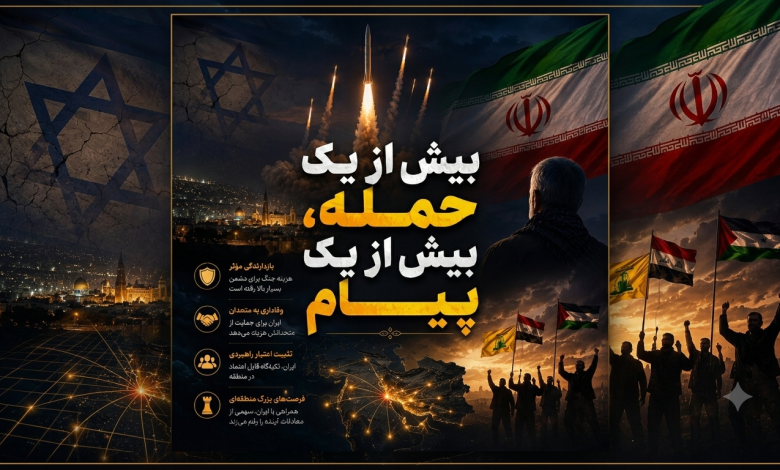
Iran has fulfilled its promise by launching heavy missile attacks on Israel after Israel’s assault on Beirut’s Dahieh district. President Donald Trump’s tone indicates that these missile strikes have been significant, but the US president does not intend to openly involve the United States in the conflict. Trump likely still views the ceasefire— which America strongly needs to maintain— as not yet violated.
Iran’s attacks on Israel convey several important points:
1. First, Iran’s military capability remains at a level that discourages the US from entering into another war. Other factors also influence this decision, including internal US conditions, the economic costs of war, and Washington’s other international priorities. Nonetheless, the US clearly understands the consequences of starting a new conflict and perceives Israel’s actions as provocations that could drag it into an unwanted war.
This situation clearly suggests that Iran still maintains substantial deterrence power and has effectively raised the costs of any direct confrontation for its adversaries.
2. Israel views the current developments as an existential threat and is therefore unhesitant to undertake risky or even unconventional actions. Israel hopes that at some point, the US will decide to enter the war. However, many sensible voices within the US recognize that the costs of war for Israel far outweigh its benefits.
3. By last night’s attack, Iran sent a message not only to Israel but more importantly to its current and potential allies. Iran demonstrated that it values its allies to the extent of bearing the highest possible costs on their behalf. It has come to understand that to remain a major power, it must be a reliable supporter of its allies.
Despite many experts believing that a deal with the US was near, Iran took the risk of attacking Israel to cement its position as a dependable stronghold for its allies. In my view, Iran’s gain from last night’s attack goes far beyond merely pleasing Hezbollah and the Lebanese people.
Effectively, Iran has solidified its position as a credible and trustworthy pillar in the region, significantly boosting its influence among both its present and potential allies.
4. Lastly, Iran now finds itself in a position where any faction in the region that strengthens strategic relations with Iran can, after Iran overcomes this crisis, benefit from the political, security, and geopolitical capacities derived from this alliance and play a more prominent role in regional developments.
This point holds many insights for those with wisdom.
Seyed Ahmad Mousavi, Mubaligh (Religious Preacher)