Closure of Afghanistan-Pakistan Borders Halts Bilateral Trade, Costs Pakistan $1.4 Billion
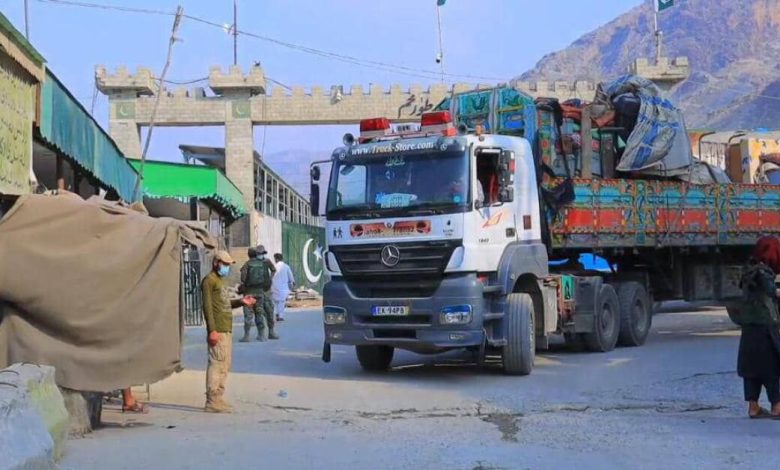
The economic magazine Business Recorder has reported that Pakistan’s economy has suffered losses amounting to $1.4 billion over the past seven months due to tensions with the Taliban administration and the repercussions of the Middle East crisis. Published on Wednesday, June 3, the report cites Pakistan’s Ministry of Commerce, emphasizing that the closure of border crossings with Afghanistan constitutes the major part of these damages.
According to a document titled “Impact of Iran and Afghanistan Conflicts on Pakistan’s International Trade,” approximately $850 million was lost between October 11, 2025, and May 18, 2026, due to the blockade of border crossings between the two countries. These crossings, considered among the region’s most vital transit routes, formed the backbone of bilateral trade.
Pakistani transport companies earned an average of $200 million annually from passenger vehicle transit through Afghanistan; these revenues have virtually ceased due to the border closures. Meanwhile, Afghanistan has sought alternative routes, including Iran’s corridors, to facilitate passenger vehicle transport.
The report further notes that the war between the US and Israel against Iran and escalating tensions in the Middle East have caused around $600 million in damages to Pakistan’s exports to Gulf countries. Business Recorder added that these conflicts have extended beyond the region, impacting the global economy as well.
Statistics show that Pakistan’s trade volume in the past nine months reached $28 billion, marking a 23% decline compared to the same period last year. Analysts attribute this decrease to the simultaneous regional instability and political tensions.
Tensions between Pakistan and the Taliban administration intensified following disputes over the presence of Tehrik-e-Taliban Pakistan (TTP) forces on Afghan soil. The conflict first led to border clashes and escalated into broader confrontations between the two sides.
During these tensions, Pakistan conducted attacks on several Afghan cities, while the Taliban administration responded by attacking border posts and blocking the Torkham, Spin Boldak, and Bahramcha crossings, halting trade with Pakistan. The ongoing closure of these passages has caused severe losses for thousands of traders and workers on both sides of the border.
Additionally, the Taliban administration has compelled traders to reroute goods purchased from China, India, and other countries through alternative paths such as Iran’s Chabahar port or the China-Central Asia railway, instead of transiting through Pakistan. Some experts believe this shift has increased the cost and transit time of goods.
The trade value between Afghanistan and Pakistan was $2.461 billion in 2024 but dropped to $1.766 billion in 2025. According to the Taliban Ministry of Commerce, Afghanistan’s exports to Pakistan fell from $817 million in 2024 to $505 million in 2025.
Similarly, Afghanistan’s imports from Pakistan decreased from approximately $1.644 billion in 2024 to $1.261 billion in 2025. With the continued complete closure of border crossings, official trade between the two countries has effectively come to a standstill in recent months, and its economic consequences persist.