Trump Rejects Draft Iran Deal Amid Rising Regional Tensions and Pro-Israel Pressure
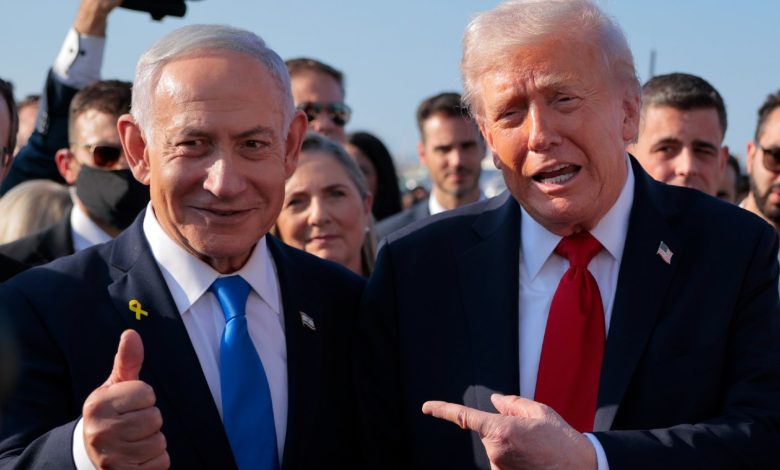
Trump has rejected the draft agreement with Iran that had been under negotiation and review by both parties over the past fifty days.
This decision is significant because the recent negotiations were initiated by Washington, and in recent weeks, there had been no sign of opposition from the U.S. president regarding the overall framework of the deal. Consequently, the sudden shift in the White House’s stance has raised serious questions about the factors influencing this reversal.
This development occurs amid scattered tensions between Iran and the U.S. in recent days; while these have not escalated to full-scale war, combined with Israeli military actions in Lebanon, the regional atmosphere is once again nearing the brink of a broad confrontation.
The reality is that the United States currently needs to resolve existing protracted crises more than it seeks to initiate a new war. Continued conflicts in West Asia not only impose heavy military and security costs on Washington but have also limited America’s ability to focus on strategic competitions with powers such as China and Russia.
Economically, the start of a major military crisis could have significant repercussions for the U.S. As financial markets, technology, and artificial intelligence anticipate key economic events in the coming months, any widespread instability in the region could negatively impact energy markets and, consequently, other areas of the global economy.
Given this, the question arises as to why the U.S. government has distanced itself from a deal that seemed capable of preventing further escalation of tensions.
The abrupt reversal by the U.S. president can be attributed to pressure and lobbying from pro-Israel factions within the U.S.; factions that, in practice, have sidelined Trump’s “America First” slogan and the MAGA discourse, sacrificing America’s interests for Israel’s concerns.
From these groups’ perspective, any agreement between Tehran and Washington could severely weaken Israel’s position against Iran and Hezbollah.
These factions consider keeping the U.S. engaged in conflict with Iran as the only way to preserve and protect Israel. Therefore, they oppose any agreement in which Iran’s power is acknowledged and its interests are, to some extent, met.
Conversely, indications suggest that Iran is preparing for various scenarios, including intensified hostilities. Should a new war break out, it is unlikely to remain confined to the geographic borders of the region.
The Strait of Hormuz, Bab-el-Mandeb, and the extensive network of U.S. interests and bases in the region could all become hotspots in such circumstances. It is also expected that if fighting expands, a significant portion of Iran’s missile and drone capacities will be directly aimed at Israel.
Therefore, Trump’s recent decision is not merely a diplomatic move but could carry broad geopolitical consequences. If the current trajectory leads to increased tensions, the U.S. and its allies may face a crisis that will be far more difficult to control and manage than its onset.
By: Seyed Ahmad Mousavi Moblagh