Taliban’s Targeted Soft Purge Against Shia Community Intensifies in Afghanistan
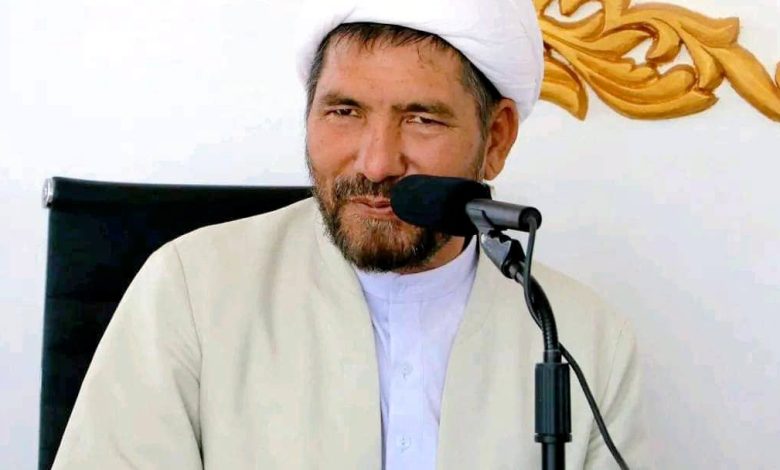
The incident involving the arrest and severe beating of Hojjatoleslam Hossein Dad Sharifi by the Taliban cannot be dismissed as a personal altercation or the misconduct of low-ranking members of the group. The repeated occurrences of such incidents against Shia scholars, alongside other Taliban-imposed restrictions on the Shia community, indicate a deliberate and systematic campaign of anti-Shia discrimination orchestrated by the Taliban.
In southern Lebanon, Shias are also facing elimination efforts by Israel. Although the situations in Afghanistan’s western Kabul and southern Lebanon may appear different on the surface, the common thread is that both communities are under pressure to have their identities and willpower broken.
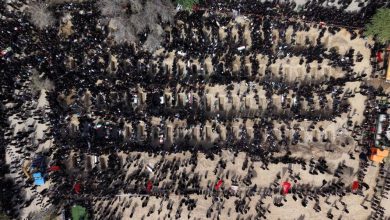
Since their return to power five years ago, the Taliban have embarked on dismantling the religious autonomy of Afghanistan’s Shias by imposing restrictions on religious practices—including mourning ceremonies for Seyyed al-Shuhada—banning the teaching of Jafari jurisprudence, confiscating Shia books from libraries, and now, on the eve of the Muharram month, criminalizing the practice of Jafari jurisprudence itself.
Unlike the Taliban of the 1990s, who sought to massacre the people, today’s Taliban are focused on engineering the Shia identity. Their objective is no longer merely territorial control but extends to control over beliefs, rituals, pulpits, and, if possible, converting Shias to other sects.
The case of Hossein Dad Sharifi is significant from this perspective. A Shia scholar was summoned, humiliated, and beaten simply for practicing Jafari jurisprudence because the Taliban have moved from theorizing opposition to the Shia faith to actively seeking their elimination.
Therefore, the disrespect shown to Hossein Dad Sharifi is not a mere personal attack—it is an assault on the Shia community’s right to live according to their religion. The Taliban understand well that the eradication of a religious group does not commence with direct bloodshed. They have taken initial steps by controlling Shia religious centers, restricting religious practices, banning university attendance, and now by breaking the presence and influence of Shia scholars. Ultimately, they aim to push the community into hiding its identity out of fear.
This strategy represents a form of soft religious cleansing, a creeping process that may lack mass killings but whose ultimate goal is the transformation and elimination of Shia identity.
What Israel accomplishes with planes and missiles in Lebanon, the Taliban are implementing in Afghanistan through soft religious cleansing.
Amid this, the silence and passivity of institutions claiming to represent the Shia community is more disgraceful than the Taliban’s actions. The Shia Scholars Council and the High Shia Council have long ceased defending the dignity and rights of Shias; instead, they have become part of the Taliban’s crisis management mechanism.
Whenever the Taliban impose new restrictions on Shias, these bodies act as submissive mediators rather than standing with the people. Their primary mission seems to be calming the Shia community rather than defending it.
When religious institutions claiming to represent Shias resort to caution and expediency instead of resisting the Taliban’s malevolence, the outcome is nothing but the normalization of humiliation.
Today, the Taliban beat a Shia scholar for practicing his jurisprudence; tomorrow, they will demand that Shias abandon their religious identity for security’s sake. History has repeatedly shown that tyranny never settles for minimal demands. Today’s silence only reduces the cost of tomorrow’s elimination.
The Shia community in Afghanistan faces a critical question more than ever: Will they become a silent, controlled minority, or is there still the will to preserve their religious independence and historic dignity?
Seyyed Ahmad Mousavi, Preacher