Former Afghan Officials Slam Taliban Rule, Call for Resistance and Policy Review
On the anniversary of the killing of General Abdul Raziq Achakzai, the former police chief of Kandahar, a number of figures and officials from Afghanistan’s former government separately and sharply criticized the Taliban administration’s policies and performance, stressing the need to rethink political engagement with Kabul and continue resistance against the administration’s monopolistic approach.
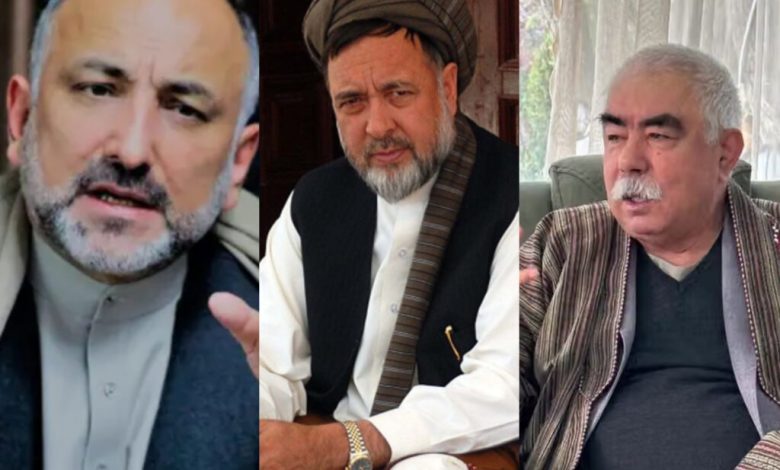
Mohammad Mohaqiq, leader of the Afghanistan People’s Islamic Unity Party and a member of the Supreme Council of Resistance, expressed distrust in negotiations with the Taliban administration and warned that if talks fail, the option of armed resistance remains on the table. He pointed to restrictions on Shiites and Hazaras, including the closure of the Khateb al-Nabiyyin University center and the confiscation of property, describing these coercive actions and the disregard for ownership documents as a threat that could fuel chaos and rising dissatisfaction.
Mohammad Hanif Atmar, Afghanistan’s former foreign minister, criticized the Taliban administration’s monopolistic policies, saying they were undermining national unity, and stressed that an entire ethnic group should not be branded because of the conduct of those in power. He also described Pakistani airstrikes on areas of Afghanistan as a clear act of aggression, and stressed the need for flexibility, intra-Afghan dialogue, and the formation of a legitimate system based on the will of the people.
Abdul Rashid Dostum, leader of the National Islamic Movement and a member of the Supreme Council of Resistance, wrote in a message that international terrorism has turned Afghanistan into a field of competition for major powers. He warned that the alarming security situation has heightened global concerns, and said the Supreme Council of Resistance will continue its struggle with full force to reject domination and establish a just system.
The anniversary of General Abdul Raziq’s killing, who died in 2018 in an infiltration attack in Kandahar province, has long become an occasion for gatherings and statements by opponents of the Taliban administration. Since the collapse of the former government structure in August 2021, fragmentation within the exiled opposition and the deadlock in intra-Afghan talks have added to the political complexities and pushed interactions between the Taliban and politicians abroad into a blind spot.