UN envoy says rule of law in Afghanistan requires legitimate, accountable government
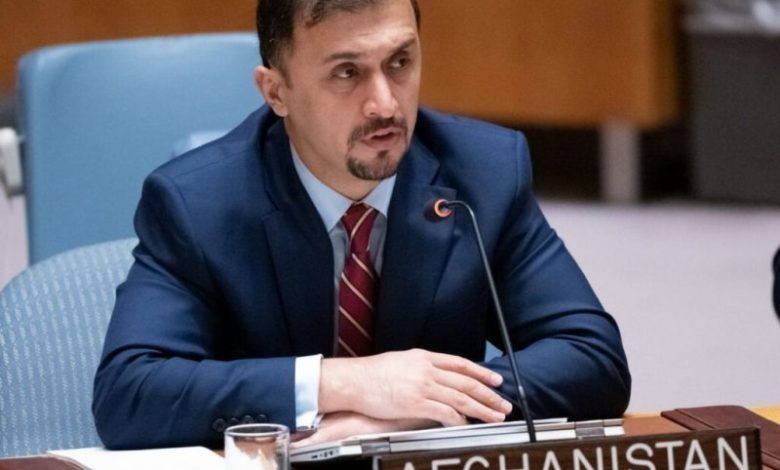
Naseer Ahmad Faiq, the acting head of Afghanistan’s Permanent Mission to the United Nations, says the weakening of constitutional, legal and judicial guarantees in the country has created conditions for arbitrary use of power, discrimination and violations of rights.
Speaking on Friday, 17 Mehr, to the Sixth Committee of the UN General Assembly, Faiq stressed that the rule of law cannot be reduced to the issuance of decrees and the existence of courts alone, and depends on the presence of a legitimate and accountable government — one in which those in power are also subject to the law.
He said the Taliban administration’s moves to dismantle legal and judicial guarantees have opened the way for the arbitrary use of authority, and that the consequences for citizens’ rights, especially those of vulnerable groups, cannot be ignored.
The acting head of Afghanistan’s Permanent Mission to the United Nations also stressed women’s right to equal rights, equal access to justice and full participation in the administration of justice, and called for discriminatory measures to be revoked.
Faiq also underlined support for legal and judicial activists and human rights defenders in Afghanistan, saying that without ensuring their security and protection, the realisation of justice and the rule of law will continue to face serious challenges.
In another part of his remarks, he said sustainable peace requires a legitimate, representative and accountable government — one formed through a political process led and owned by Afghans. According to him, this process must be accompanied by the support and facilitation of the United Nations and include the participation of women, civil society, democratic forces and other credible Afghan parties.
The Sixth Committee of the UN General Assembly is one of the body’s main committees and examines legal issues, including the principles of the rule of law and international law.