Taliban administration says Afghanistan’s trade has grown, but imports still far exceed exports
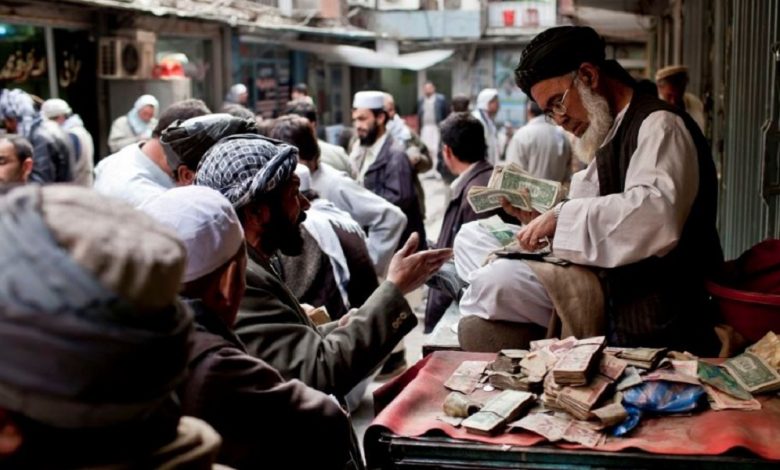
The Taliban administration says Afghanistan has made economic progress over the past five years, but official figures released by the authorities show that the country’s imports remain far higher than its exports.
According to statistics from the Taliban-run Ministry of Industry and Commerce, Afghanistan’s total trade last year reached $13.932 billion. Of this, $1.807 billion was exports and $12.125 billion was imports.
The figures come as Afghanistan’s trade in the second half of 2025 faced serious problems in its commercial relations with Pakistan. Following clashes and the closure of transit routes, including the Torkham crossing, trade between the two countries was halted for a time, highlighting Afghanistan’s vulnerability to the blocking of transit corridors.
The economic deputy office of the Taliban’s prime minister had previously accused Pakistan of using the closure of transit routes as a tool to pressure Afghanistan. Mullah Abdul Ghani Baradar, the Taliban prime minister’s economic deputy, also called for an end to trade with Pakistan after the escalation of tensions and said alternative routes should be sought for transporting Afghan goods.
Zabihullah Mujahid, the Taliban’s spokesman, says important work has been carried out over the past five years in the mining, power generation, agriculture, transport and regional connectivity sectors. According to him, work on regional projects such as TAPI, TAP and CASA-1000 is also continuing.
Speaking about the TAPI project, he said: “It is true that the TAPI project is underway on Afghan soil and, God willing, it will be completed in 2026 up to Herat. But two other phases remain, Helmand and Kandahar, and then it will be connected to Balochistan in Pakistan. The region needs these projects and they should not be made political.”
Taliban officials have also claimed that the afghani has remained stable against foreign currencies and has appreciated against some of them. According to these officials, the launch of infrastructure projects, increased domestic production, expansion of mining activities, growth in national revenue, funding of the national budget from domestic income, reconstruction of highways and easier transit arrangements are among the other achievements the administration cites.
The Taliban administration also claims that Afghanistan’s exports have doubled during this period and that jobs have been created for hundreds of thousands of people in the mining sector and public welfare projects. However, no further independent details are provided in the text on how these claims were measured.
According to information from the Taliban-run Ministry of Industry and Commerce, India, Pakistan, Uzbekistan, the United Arab Emirates, Kazakhstan, Iran, Turkey, China, Iraq and Tajikistan are among Afghanistan’s main export markets. Figs, raisins, opium and its seeds, coal, cotton, pistachios, almonds, saffron, apricots, cumin, apples, grapes, honey, beverages, minerals, carpets, pomegranates and pine nuts are also listed among Afghanistan’s major export items.
Because of its geographical location, Afghanistan is heavily dependent on regional transit routes, and the Torkham crossing is considered one of the key gateways for trade with Pakistan and access to some external markets. Any disruption to these routes can directly affect the country’s imports, exports and the movement of commercial goods.