National Interest: US Faces Serious Challenges in Drone Warfare
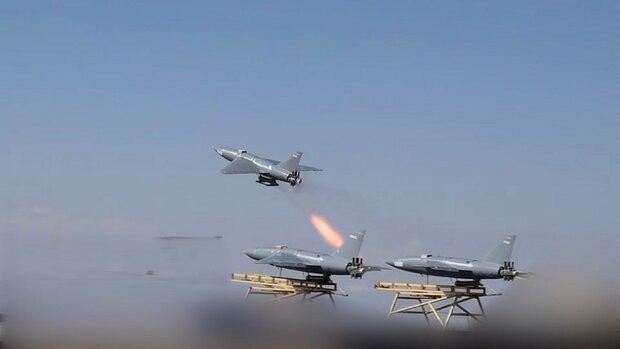
The American magazine National Interest, in an analytical report, has written that recent military developments, including conflicts related to Iran and Yemen, show that the United States is facing serious challenges against the expanding drone and missile threats; an issue which, according to the author, has weakened the country’s position in one of the key arenas of modern warfare.
The report states that US military experiences in Iraq and Afghanistan, as well as recent operations in the region, indicate that the focus of threats has shifted from guerrilla warfare and roadside bombs to advanced missile and drone systems; systems that, according to this magazine, have transformed the nature of battlefields.
National Interest, referring to the US air and naval operations against the Yemeni Ansarallah in 2024, claimed that these attacks did not achieve the strategic goals desired by Washington and, despite that, full security of shipping routes in the Red Sea was not ensured. According to the report, the volume of commercial ship traffic in this route has significantly declined compared to 2023.
The magazine warned that without finding an effective solution to counter drone and missile attacks, the US’s ability to secure important maritime passages, including the Strait of Hormuz, the South China Sea, and the Strait of Malacca, will face greater difficulties.
In another part of the report, the Pentagon’s third-generation “Compensatory Strategy,” which relies on technologies such as artificial intelligence, cyber warfare, robotics, and human-machine collaboration, has been evaluated and claimed that this approach has so far failed to provide a decisive response to emerging threats.
National Interest also referred to the development of missile and drone capabilities by Iran and Russia, stating that this trend has changed the balance of power in some battlefields. Within this context, it mentioned the ballistic missile “Kheibar Shekan” and the drone “Shahed” as examples and claimed that the low production cost of these devices compared to expensive interceptor missiles has created an economic challenge for US defense systems.
The report concludes by emphasizing that the expansion of drone and advanced missile usage in regional conflicts, from the Black Sea to the Middle East, indicates that the US military will inevitably have to rethink its doctrine and operational capabilities to maintain its military superiority.