Uzbekistan Establishes Green Air Corridor for Afghan Traders
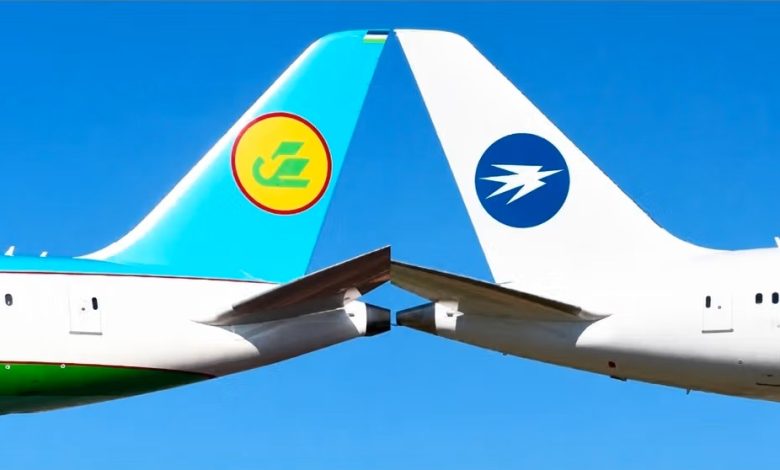
Uzbekistani officials have announced the establishment of a “green air corridor” for Afghan traders, a plan that allows merchants to use Uzbekistan’s international flights to transport their goods to third countries.
The Uzbek-language publication “Gazeta,” quoting Ulugbek Qosimov, the governor of Surkhandarya, reported that this topic was discussed during a meeting chaired by Uzbek President Shavkat Mirziyoyev concerning the development of the Trans-Afghan railway logistics system. According to Qosimov, a special commission will be formed to regulate and implement this process.
The Surkhandarya governor also highlighted a significant increase in logistical capacities at the Uzbekistan-Afghanistan border. According to the data provided, the number of transport corridors increased from four to twelve, and the capacity for cargo trucks crossing the border expanded from 350-400 trucks per day to 1,000-1,200 trucks per day.
He further noted growth in rail transport, with daily freight wagons increasing from 250 to nearly 500. Additionally, cargo transfer through the river port has also risen; while over 250,000 tons of goods passed through that route in the entire last year, 220,000 tons were transported in just the first six months of this year.
Uzbek officials stated that demand for logistical services from foreign investors and local traders is growing. Consequently, a new logistics center is planned near the border with Afghanistan, for which 50 hectares of land will be allocated. Tax incentives and other facilities have been considered for this project.
During the meeting, the topic of re-exporting Afghan agricultural products was also discussed. The governor mentioned that proposals to address the challenges of selling Afghanistan’s organic products have gained support and that a special commission will be formed to implement these solutions.
Experts believe that creating such corridors could provide Afghan traders, who have faced extensive economic and banking restrictions in recent years, with new opportunities to access regional and global markets.