Taliban Administration Announces Expansion of Railway Corridors in Afghanistan
Afghanistan’s Ministry of Public Works under the Taliban administration has announced efforts to leverage the country’s geographic position to become a key economic connection hub in the region. A spokesperson for the ministry stated that developing domestic railway lines and establishing new corridors could link Central Asian countries to South Asia and global markets through Afghanistan.
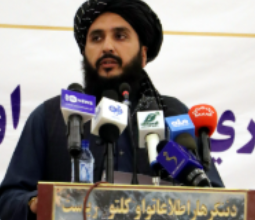
According to Mohammad Ashraf Haqshenas, the ministry’s spokesperson, the Taliban administration is focused on expanding the railway network and preparing new transit corridors so that Afghanistan can become a “reliable crossroads for regional trade and transit.” He emphasized that these projects are part of a broader plan to strengthen the country’s economic standing.
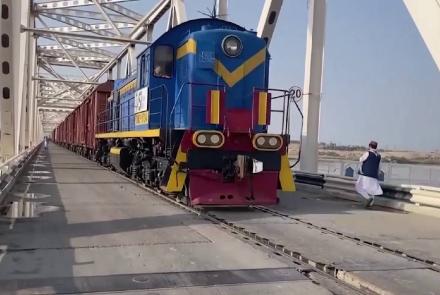
Current information indicates that approximately 400 kilometers of active railway line exist in Afghanistan, connecting through four border points to Uzbekistan, Turkmenistan, and Iran. The Iranian news agency IRNA reported that expanding transport routes through Afghanistan could transform the country into a pivotal link connecting Central Asia to the Indian Ocean and global markets.
Several economic experts note that Afghanistan’s transit location holds significant potential for increasing transit revenue. Qutbuddin Yaqubi believes that railway lines passing through Afghanistan could generate substantial income and expand regional trade relations. Abdul Nasir Rashtia also stressed that faster and more cost-effective movement of commercial goods will enhance market competitiveness.
However, analysts caution that realizing these ambitions requires political stability, sustained investment, and broad engagement with regional and global partners — challenges that are significant under the current circumstances given the Taliban administration’s economic difficulties and international restrictions.
Due to its strategic geographic location, Afghanistan has long been known as a bridge connecting Central Asia, South Asia, and the Middle East. In recent years, competition for establishing alternative trade corridors in the region has intensified, with Afghanistan striving to maintain and strengthen its position in this process.