Afghanistan Establishes 250 New University Faculties Amid Infrastructure and Expertise Challenges
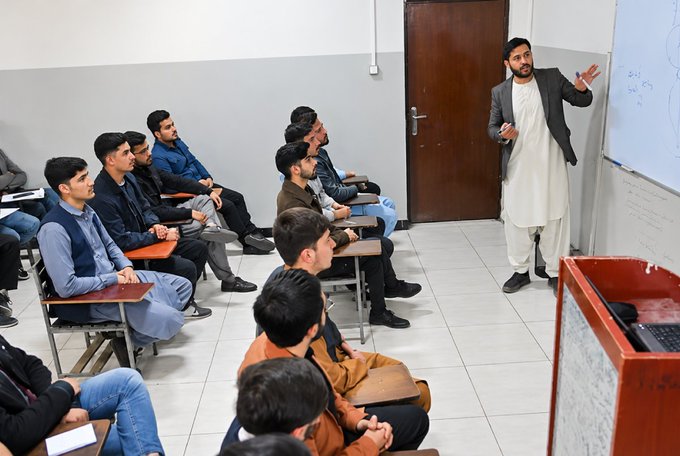
The Union of Private Universities of Afghanistan has announced that 250 new faculties have been established in both private and public universities across the country, with plans underway to establish an additional 400 faculties. These faculties cover a range of disciplines including artificial intelligence, water management, mining, and radar technology to address the evolving needs of Afghan society.
Despite the rise in the number of faculties, significant challenges persist, including a shortage of specialized teachers and a lack of laboratories and standard educational equipment, which negatively impact the quality of education. University instructors emphasize that while the creation of new faculties is essential, aligning educational programs with labor market demands must be taken seriously.
Zakiullah Mohammadi, a university teacher, stressed that access to standard scientific and educational facilities is crucial for keeping pace with global developments. Meanwhile, the head of the Taliban-run Ministry of Higher Education has stated that the purpose of expanding faculties is to train skilled personnel who can meet the country’s real needs.
The head of the Union of Private Universities pointed out not only the shortage of professors and equipment but also the inadequate university buildings, often located in rented commercial properties. He called for the allocation of government land to construct standard buildings. Similarly, university instructor Janat Faheem Chakari urged the Taliban-led Ministry of Higher Education to allocate land for universities and avoid renting commercial spaces.
According to statistics from the Union of Private Universities, there are currently 105 private universities operating nationwide, enrolling approximately 100,000 students with nearly 14,000 teachers and staff. Although the expansion of faculties is seen as a positive step, the lack of necessary infrastructure and the administrative challenges faced by the Taliban’s higher education sector may hinder the achievement of educational goals and the training of skilled labor in Afghanistan.