Taliban Foreign Minister Defends Policies, Calls for Expanded Ties With World
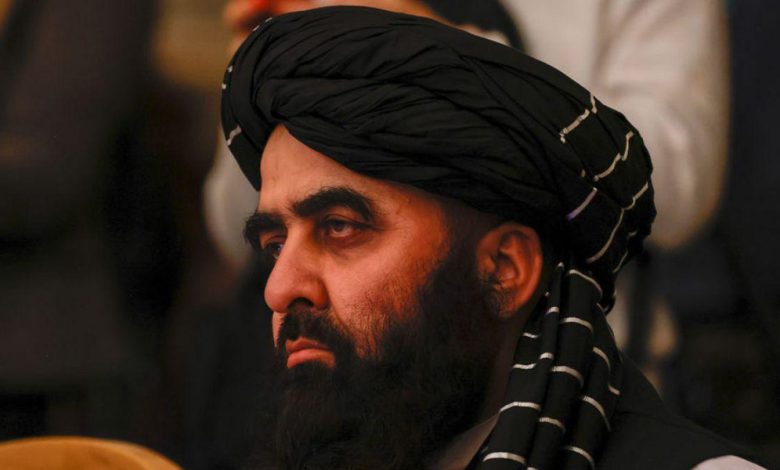
Amir Khan Muttaqi, the acting foreign minister of the Taliban administration, has told the BBC that continuing to deny girls access to secondary education and above could lead in the future to a shortage of female teachers and female doctors in Afghanistan, a problem he said would be addressed despite the ongoing restrictions.
In response to questions about restrictions imposed on women and girls in education, work and public life, Muttaqi defended the Taliban administration’s policies, saying they should be judged on the basis of Afghanistan’s “cultural and social values,” not Western standards, as he put it.
He also claimed that more than three million girls are being educated in schools and religious seminaries, and said girls below sixth grade attend school and female teachers also take part in their instruction. However, he acknowledged concerns over the continued closure of education for girls above sixth grade and called it a problem.
In another part of the interview, the Taliban administration’s acting foreign minister rejected criticism of the human rights situation in Afghanistan and described sanctions imposed on the country as politically motivated. He said there was no logical reason for the sanctions to continue.
At the same time, Muttaqi spoke of expanding the Taliban administration’s relations with regional countries, countries in the East and some European states, and described recent talks in Belgium on Afghan migrants as positive. He also called Russia’s recognition of the Taliban administration a positive development, while stressing that the issue matters to them.
He further rejected claims about the presence of al Qaeda and other foreign armed groups in Afghanistan, saying the Taliban administration would not allow Afghan soil to be used to attack other countries. Muttaqi also said improved security and the eradication of opium cultivation were issues that, he said, should be given attention.
Asked about relations with the United States, the Taliban administration’s acting foreign minister said the group wanted positive and normal relations with Washington, but would not accept the presence of foreign military forces. He added that the return of about six million Afghans had put pressure on the country, although, according to his claim, they had been moved to their areas of origin.
Since returning to power in August 2021, the Taliban administration has barred girls above sixth grade from education and imposed sweeping restrictions on women’s work and social participation, measures that are among the main targets of criticism from human rights groups and many countries.