Experts Warn of Serious Global Oil Shortage Within Three Weeks Amid Strait of Hormuz Crisis
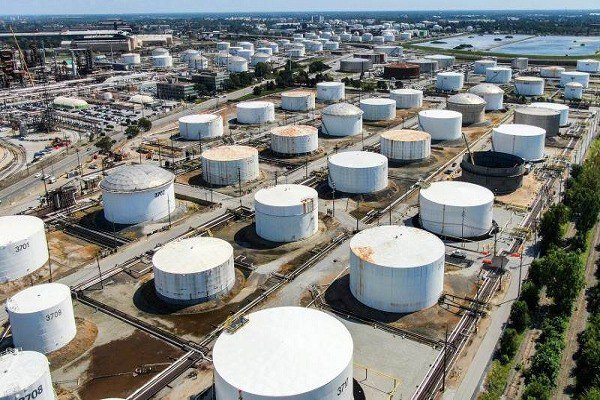
One hundred days after the closure of the Strait of Hormuz, signs indicate that the global oil market is approaching a critical juncture, where a significant depletion of strategic reserves could lead to a serious supply shortage and rising oil prices in the coming weeks. Experts warn that the resources which have so far prevented a sudden price surge are running out.
According to data from the International Energy Agency (IEA), around one billion barrels of oil have been removed from the global market since disruptions in ship traffic began due to military conflicts involving the United States, Israel, and Iran. The financial institution JPMorgan reported that despite activating alternative routes through Saudi Arabia and the United Arab Emirates, millions of barrels of daily global supply are still being lost.
On March 11, IEA member countries agreed to a coordinated release of 400 million barrels from emergency reserves—marking the largest joint withdrawal in the agency’s history. Brookings Institution analysts noted that 301 million barrels of this amount were crude oil, equivalent to injecting about 2.5 million barrels per day over four months.
Before the crisis began, nearly 15 million barrels of crude oil passed daily through the Strait of Hormuz, a strategic corridor accounting for about one-third of global crude oil trade. The release of strategic reserves, along with the consumption of commercial stocks and oil stored on tankers, prevented immediate price hikes; however, these resources are now dwindling.
Lori Heitayan, an energy expert, stated that the extensive withdrawal from reserves managed to offset most of the market shortfall, with OECD member countries acting quickly under the assumption that the crisis would be short-lived. According to her, nearly 300 million barrels have been withdrawn from reserves, and with the use of 100 to 150 million barrels of floating oil, relative price stability was maintained.
Conversely, Amer Al-Shobaki, an oil market expert, emphasizes that the market is nearing the “crisis tipping point.” He explained that the reserves which prevented oil prices from reaching about $150 per barrel are running out, and alternative routes only partially compensate for the supply shortfall. Currently, the market has lost around 10% of global supply.
Torell Bosoni, head of the Oil Industry and Market Division at the IEA, warned that strategic reserves could reach a critical low before the summer peak demand. He noted that even if the Strait of Hormuz reopens and an immediate agreement is reached, a full market recovery to normal conditions would take six to eight months.
Recent research reports indicate that with declining effective reserve levels and refinery capacity limits, the global market could face a serious shortage within three weeks, a situation that might push oil prices up to around $150 per barrel.
According to Goldman Sachs research, strategic reserves cannot be reduced to zero because floating roof tanks must remain at least 20% full to function effectively. Furthermore, pipelines require a constant oil flow, and refinery operations dropping below 65% capacity would make long-term operation without losses or technical damage difficult.
Brookings Institution forecasts that by mid-July, many temporary market supports will end, creating a supply gap requiring compensation of approximately 7.1 million barrels per day, a shortfall that could exert significant upward pressure on prices.
Although theoretically further withdrawals from strategic reserves remain an option, practical limitations such as pumping speed, infrastructure capacity, and the need to maintain minimum reserves for energy security restrict the feasibility of using these resources. Al-Shobaki warned that if the number of ships passing through the Strait of Hormuz does not increase, oil prices will experience a severe jump within three weeks.
He added that potential consequences are not limited to oil but also include strategic commodities from the Persian Gulf such as sulfur, urea, petrochemical products, helium, and aluminum. In such a scenario, agricultural costs, industrial production, semiconductor manufacturing, and medical equipment would rise, putting pressure on food and technology supply chains as well.