Lost Documents Hinder Education for Afghan Children in Pakistan
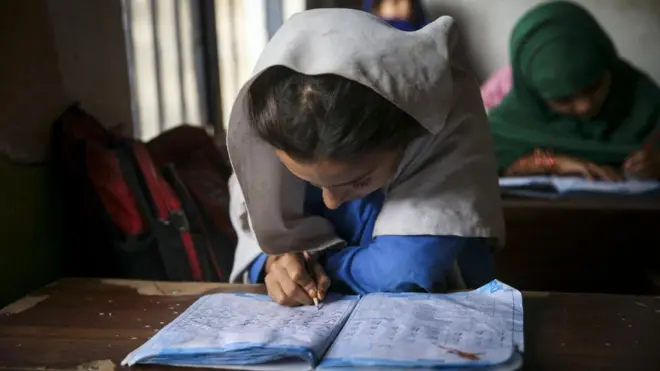
The lack of identity documents has become one of the most serious obstacles to the education of Afghan refugee children in Pakistan. Many families who fled Afghanistan and entered Pakistan lost their family registration papers and identity cards, and now their children cannot enroll in public schools due to the absence of these documents.
According to statistics from Pakistan’s National Commission for Child Rights, only 28 percent of refugee children of school age have been able to attend public schools or educational centers supported by the United Nations High Commissioner for Refugees (UNHCR). The requirement to provide official identity documents has effectively left thousands of Afghan children outside the formal education system.
In response to these restrictions, parts of the Afghan refugee community have sought alternative ways to educate their children. In the city of Rawalpindi, two Afghan teachers established an educational center called the “Tafal Home Learning Circle,” where children and teenagers continue their education using donated books and online resources.
In areas like Mohammadi Chowk, families utilize mosques and small community centers to hold informal classes. These programs operate mostly with limited resources and free internet access, aiming to prevent children from falling behind in their education.
Meanwhile, one educated young Afghan has been conducting classes for reading, writing, mathematics, English language, and Afghan cultural studies in rented rooms. Educational activists say these initiatives help fill some of the gaps but face significant challenges.
The lack of sustainable financial support and reliance on sporadic aid have made it difficult for these centers to continue operating. Furthermore, educational certificates issued by these informal classes are not recognized by Pakistan’s formal education system, complicating students’ possible return to formal schools.
Education experts in crisis situations warn that the continuation of this condition risks depriving an entire generation of Afghan refugee children of their right to education. They call for easing identity documentation regulations, recognizing community-based educational centers, and creating sustainable, long-term programs to support refugee education.