Afghan Women in Australia Urge Government for Immediate Action Amid Rising Risks
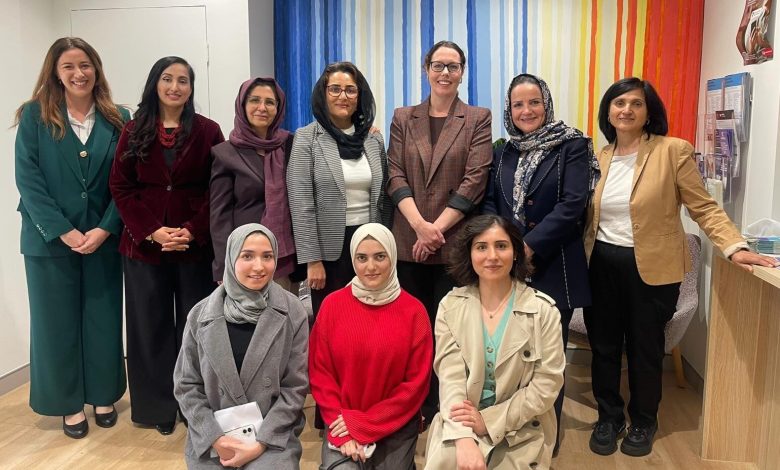
A group of women’s rights activists under the name “Voice of Afghan Women in Australia” has called on the Australian government to take urgent and practical measures to support Afghan women facing serious threats inside Afghanistan and in some neighboring countries. This appeal was made during a meeting and in an official letter addressed to Alicia Payne, a member of the Australian Parliament.
Niloufar Ebrahimi, a former parliament member and one of the founders of this movement, stated on Wednesday, 28 April, that the group’s concerns about the situation of women in Afghanistan, as well as Afghan women living in Iran and Pakistan, have been shared with Australian officials. According to her, thousands of women in these countries face the risk of deportation, and many are seeking resettlement in Australia.
In the activists’ letter, it is emphasized that forcibly returning these women to Afghanistan means sending them under the rule of the Taliban administration—a regime which, according to the activists, has previously restricted or prohibited fundamental women’s rights including the right to education and work. They have highlighted that over one hundred decrees issued by the Taliban government targeting women’s rights and freedoms remain in place without any cancellations.
The group referenced Australia’s activation of the “Convention on the Elimination of All Forms of Discrimination Against Women” (CEDAW) with regard to Afghanistan in 2024 and urged the Australian government to uphold its commitments. In the letter, the situation of women in Afghanistan is described as a state of “gender apartheid,” and the group requested that Australia officially recognize this condition.
Furthermore, the activists called for expedited visa processing for Afghan women, provision of scholarships, and the use of diplomatic tools to prevent the deportation of Afghan nationals from Iran and Pakistan.
Previously, several United Nations experts have also labeled the situation of women in Afghanistan as gender apartheid and urged the international community to take effective and practical measures to protect Afghan women’s rights.