Five Centuries of Control: The Geopolitical Power of the Strait of Hormuz
Five hundred and nineteen years ago, the Strait of Hormuz was seized by Portuguese sailors; an event that marked not only a military change but also a turning point in the history of global trade control. Since then, this narrow yet vital passage has become one of the world’s most important maritime geopolitical chokepoints, where control is synonymous with holding the pulse of the global economy and international politics.
In the early 16th century, when Portuguese Admiral Afonso de Albuquerque captured the Strait of Hormuz, he wrote to the King of Portugal that “the fate of global trade is in your hands.” This statement laid the foundation for a geopolitical doctrine: whichever power controls the strategic maritime chokepoints will dominate global affairs.
This doctrine has endured for five centuries. The Strait of Hormuz has remained one of the world’s most sensitive geopolitical locations; a point where any dominant naval power could effectively influence trade flows and, later, global energy supply. Viewing this as a continuous historical narrative, three main periods emerge.
At the beginning of the 16th century, with the Portuguese entry into the Indian Ocean waters, a European power gained direct control over the Strait of Hormuz for the first time. This started with Afonso de Albuquerque’s conquest of Hormuz Island in 1507, turning Portugal into the controller of one of the most critical global trade chokepoints.
During this period, the Portuguese aim was not merely military presence but dominance over the trade network between East and West. By levying tolls on ships and controlling spice and silk routes, they amassed significant profits. This dominance lasted over a century until 1622, when, with the cooperation of Shah Abbas I’s forces and the English East India Company, the Portuguese were expelled from Hormuz.
Following Portugal’s exit, British influence gradually spread in the Persian Gulf, but the nature of dominance changed. Unlike the Portuguese, who had direct military control, Britain exercised influence primarily through political and economic means.
From the 17th century until the early 20th century, the English East India Company and later the British government established protective treaties with regional sheikhdoms and deployed naval forces, effectively maintaining security and indirect control over the Strait. Britain’s main motivation was safeguarding the vital route to India, its most important colony. This presence also prevented rivals such as Russia and France from gaining influence. This era can be described as the age of “indirect hegemony,” where control was exerted without formal occupation.
In the 20th century, especially after World War II, with Britain’s decline, the regional order shifted. Britain’s official withdrawal from the Persian Gulf in 1971 was a turning point that increased the role of regional actors. However, the power vacuum was rapidly filled by the United States.
From the 1970s onward, the US became the foremost external force securing the Strait of Hormuz—a trend intensified after Iran’s Islamic Revolution. The American military presence, particularly through the Fifth Fleet, was not aimed at direct territorial control but to guarantee “freedom of navigation” and the uninterrupted flow of oil to secure US resources.
During this era, the Strait of Hormuz’s significance transformed from a trade route to a vital artery of the global energy supply. A substantial portion of the world’s oil passes through this strait, making the interests of the US and its allies in maintaining its stability critical. At the same time, this presence is part of broader geopolitical competition to contain regional and global powers.
In summary, the type of dominance over the Strait of Hormuz evolved from “direct colonial control” during the Portuguese era, to “indirect imperial influence” under British rule, and then to “global security hegemony” in the American period. Despite these changes, one constant remains: the unparalleled importance of the Strait of Hormuz as one of the world’s most crucial economic chokepoints. However, what is emerging today is a new phase in this historical equation—a phase some call a “zero point” or the beginning of a redefinition of the regional order.
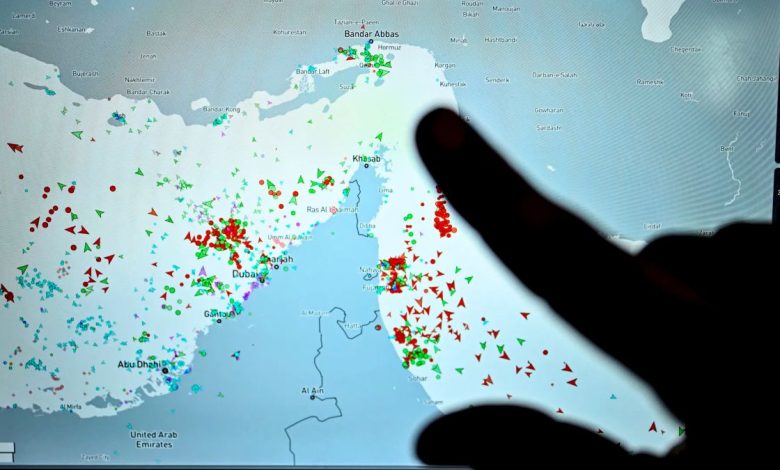
Power balance shifts according to accounts of field battles indicate that, after centuries, Iran has effectively regained control over the Strait of Hormuz. Iran is determined to become the main orchestrator of twenty percent of the global energy supply and maritime trade passing through this passage, conditioning transit on coordination with its forces.
If this trend continues, it could signify a fundamental shift in the balance of power, both militarily and economically. The issue is no longer just about whether the strait is closed or open, but about “managing energy flow” and directly influencing the global oil market and maritime commerce.
Such a situation could compel all actors from east to west to reassess their strategies. Economically and politically, Iran seeks full lifting of sanctions, release of frozen assets, and even compensation through controlling this “Strait of Power” and collecting tolls.
These demands can be interpreted as a “geopolitical tax,” the cost that the US and the world must pay to maintain access to this vital artery.