FAO: 19 Million Afghans Face Food Insecurity This Winter
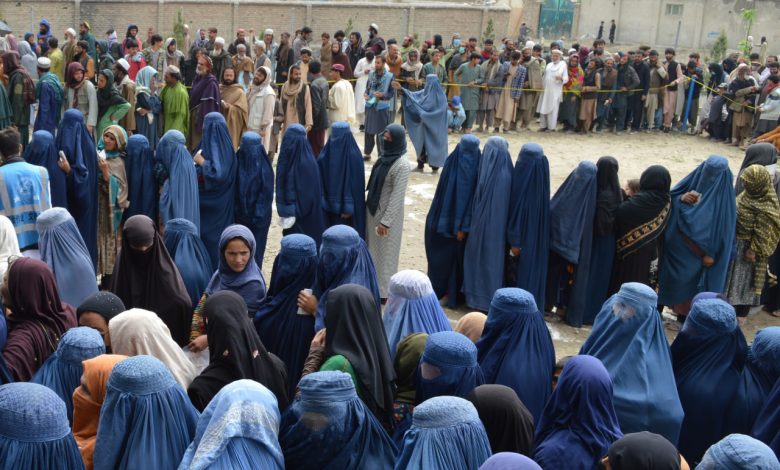
The Food and Agriculture Organization (FAO) and the World Food Programme have warned that around 40 percent of Afghanistan’s population, equivalent to 19 million people, will face high levels of acute food insecurity from November this year to April next year — a situation worse than last year’s forecast of 17.4 million.
In a joint statement, the two agencies said nearly five million people will be in emergency hunger, or Phase 4 of the Integrated Food Security Phase Classification. That figure is said to be double the level projected for the April to September 2026 period.
According to the latest Integrated Food Security Phase Classification analysis, Badakhshan, Badghis, Daikundi, Ghor, Samangan, Sar-e Pul and rural areas of Ghazni will face the most severe conditions. FAO and the World Food Programme stressed that urgent food assistance and emergency support for agriculture are essential to prevent deaths and the collapse of household livelihoods.
At the same time, the number of people suffering from acute malnutrition in Afghanistan is expected to rise by about 10 percent in 2027 compared with 2026, reaching four million. One-quarter of these cases will be severe and life-threatening, with women and children most affected.
The two agencies said prevention and treatment services for malnutrition remain far below existing needs. They called for immediate funding to expand food aid, emergency agricultural support, and prevention and treatment services.
According to FAO and the World Food Programme, aid must reach families before winter makes access to vulnerable communities more difficult and planting opportunities are lost. The two agencies warned that Afghanistan cannot endure another year of widening hunger and malnutrition.
Richard Trenchard, FAO’s representative in Afghanistan, has stressed the need for more practical solutions, pre-emptive action before predictable crises, and investment in processing and local agricultural businesses. He said families need support and sustainable income opportunities to get through the winter.
John Aylieff, head of the World Food Programme office in Afghanistan, also said hunger and malnutrition are putting greater pressure on Afghan families, and that falling resources are pushing more people closer to catastrophe. He added that the gap between rising needs and shrinking budgets is widening every day.
Afghanistan has faced a broad humanitarian crisis since the Taliban took control again. The expulsion of millions of migrants from neighbouring countries, drought, floods, earthquakes, the closure of the Afghanistan-Pakistan border, disruptions to goods transit through the Strait of Hormuz, and reduced international aid have all been cited as factors intensifying the crisis.