Rabani Assassination Anniversary Marked With Focus on His Role in Peace Process
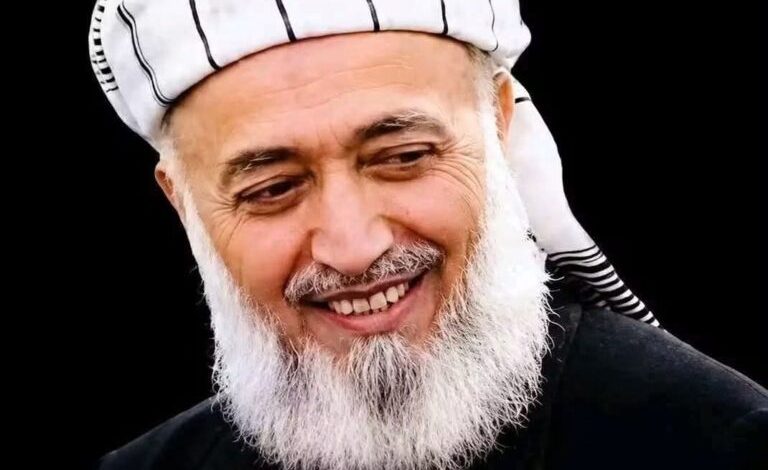
The 15th anniversary of the assassination of Burhanuddin Rabbani, Afghanistan’s former president and head of the High Peace Council, was marked with tributes from a number of former officials, politicians, researchers and close associates, who recalled his political and intellectual legacy and stressed his role in efforts to resolve Afghanistan’s conflict through political means.
In the messages published, Rabbani was described mainly as a moderate figure, a supporter of dialogue and a defender of religious moderation. Some of those figures said that in the final years of his life, he emphasized peace, political participation, the rule of law and opposition to monopoly of power.
Abdullah Abdullah, Afghanistan’s former chief executive, described Rabbani as one of the pioneers of the Islamic awakening and one of the intellectual figures in the struggle against despotism and occupation. He said Rabbani believed in linking the Islamic heritage with the intellectual and social needs of the present, while also being a moderate and peace-seeking politician.
Hamid Karzai, Afghanistan’s former president, also described Rabbani as a religious scholar, jihadist leader, national figure and peace-seeker. According to him, Rabbani worked to strengthen unity and secure peace in Afghanistan.
Salahuddin Rabbani, leader of Afghanistan’s Jamiat-e Islami, said his father’s intellectual framework was based on developing human capital, strengthening the role of women, the rule of law, reforming the structure of power, justice and the people’s right to determine their political destiny. He added that Rabbani regarded monopolization, superiority-seeking and discrimination as factors behind the failure of Afghanistan’s political experiences.
Maulvi Habib Hossam, head of the council of scholars of the National Resistance Front of Afghanistan, and several other political and cultural figures also described Rabbani as a moderate, tolerant figure opposed to ethnic prejudice. Sayed Baqer Mohseni, a university professor and political analyst, also said that Rabbani avoided emotional reactions in difficult political circumstances.
Alongside these tributes, Aziz Barz, an international relations researcher, pointed to the difficulties of Rabbani’s presidency, saying that the period was marked by the collapse of the power structure, a security vacuum, civil war and regional interference. He said that despite these challenges, Rabbani insisted on dialogue and political solutions, and that his assassination harmed Afghanistan’s political talks process.
Mujib-ur-Rahman Rahimi, a former Afghan diplomat, also said that in the final years of his life Rabbani was dissatisfied with the country’s political situation and the performance of some members of Jamiat-e Islami within the power structure, and he stressed the rebuilding of the movement. Qadam Shah Shaheem, former chief of staff of Afghanistan’s army, also said that after 2001 Rabbani accepted responsibility for the High Peace Council in order to play a role in the new political process and help secure lasting peace.
Burhanuddin Rabbani was assassinated on 29 Sonbola 1390 in Kabul, while meeting a man who identified himself as a representative of the Taliban office for peace talks. Afghanistan’s former government later gave him the title of “Martyr of Peace,” a designation that was also repeated in the years that followed at memorial ceremonies for him in a number of provinces across the country.