Iran’s Deputy Ambassador in Kabul Questions Broader Definition of ‘Resistance’ Beyond Gaza, Lebanon, and Iran
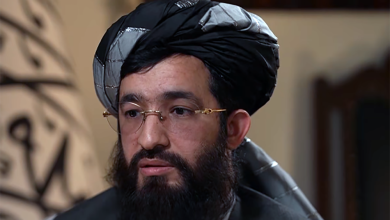
In a recently released video clip, Iran’s Deputy Ambassador to Kabul explicitly stated: “True resistance exists only in dear Gaza, oppressed Lebanon, and heroic Iran.”
This statement is not merely a diplomatic remark but a definition of “resistance” that overlooks a significant part of the geography and stakeholders within this axis. Under this definition, Iraq, Yemen, and Afghan and Pakistani forces—who have fought terrorism, takfiri currents, and the regime of domination for years—are practically excluded.
Several fundamental questions arise:
1. The Deputy Ambassador must explain how nearly two decades of the roles played by Iraqi resistance forces, Yemen’s Ansarullah, and Afghan forces present in Syria—whom he himself commanded for years—can be omitted from the concept of “resistance.” Has the Islamic Republic not always referred to these groups as parts of the resistance front?
If this definition is accepted, on what basis are the Fatemiyoun fighters who sacrificed their lives battling ISIS and takfiri currents on the same “resistance front” that Mr. Mortazavi named now excluded from this framework?
2. But the more crucial issue is Afghanistan.
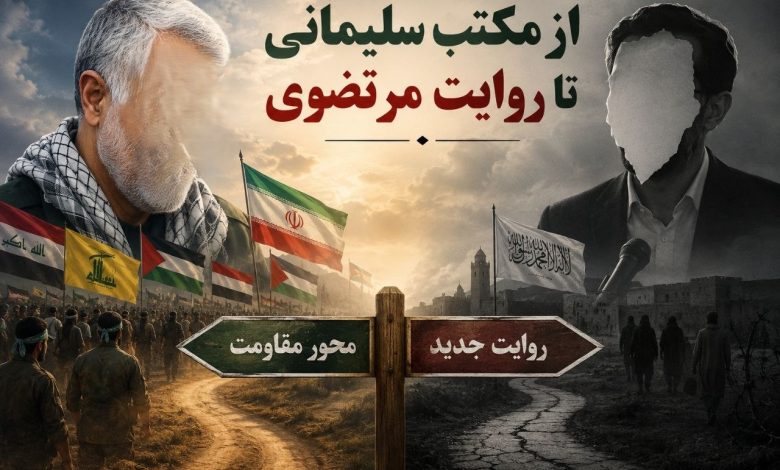
The understanding of “resistance” presented today by Iran’s Deputy Ambassador sharply diverges from the approach and actions of the late Martyr General Qassem Soleimani towards Afghanistan and the resistance axis.
Martyr Soleimani did not limit resistance to a few countries; rather, he sought the formation of indigenous capacities across the region to combat terrorism, extremism, and domination. In Afghanistan, forces resisting the Taliban were considered, in his words, part of the “resistance front,” and the Taliban was recognized as a terrorist group opposing the Islamic Republic.
Given this, if Mr. Mortazavi’s current definition is the standard, what becomes of all the blood, struggle, and resources General Soleimani invested to build this structure?
One cannot speak of Soleimani’s school of thought yet disregard one of its key strategic pillars or offer a definition of resistance that starkly contradicts his legacy.
3. But the issue is not limited to Afghanistan; it concerns a shift in the definition of “resistance” that Iran’s Deputy Ambassador in Kabul appears to be attempting to cement—a definition more aligned with the Taliban’s narrative than with the resistance axis rhetoric. It seems Hasan Mortazavi, on this matter, acts more as a spokesperson for the Taliban than for the Islamic Republic.
While the Islamic Republic’s regional policy was based on empowering nations and local movements to counter terrorism and domination, today an official Iranian figure denies the “true resistance” status of the Afghan resistance against the Taliban.
This shift, especially considering Iran’s changed policy following the collapse of the Afghan Republic, requires explanation. The Taliban, long considered an extremist force and regional security threat in official Iranian discourse, gradually became a subject for dialogue and engagement, even occasionally described as an “authentic regional movement” or part of the resistance axis.
Naturally, any government can adjust its foreign policy according to regional developments; however, such changes must not involve distorting the past or ignoring the forces and capacities the Islamic Republic has invested in Afghanistan and the region over the years, who have also stood alongside Iran without faltering.
Since Hasan Mortazavi is an official Iranian diplomat, his remarks may be perceived as reflecting Tehran’s official policy. Therefore, it is expected that the Islamic Republic clarify whether these statements represent the country’s official stance or are the personal views of a diplomat.
If this is the Islamic Republic’s formal position, several questions must be answered: Has Tehran revised its definition of the resistance axis? Are Iraq, Yemen, and the Afghan forces allied with Martyr Soleimani no longer part of this front? Does Afghanistan’s resistance against the Taliban no longer hold a place in the resistance framework? If so, on what basis and since when has this change occurred?
These questions gain greater urgency considering the words of the Martyr Leader of the Islamic Ummah concerning Afghanistan, who emphasized that the Islamic Republic supports the Afghan nation, not its governments.
If this is the case, how can one simultaneously emphasize support for the Afghan people yet deem the resistance of part of that same people against the Taliban as outside the resistance circle?
4. The Deputy Ambassador’s remarks do not merely defend the Taliban; they raise serious questions about the future of the Islamic Republic’s regional policy.
The Taliban has repeatedly demonstrated that it acts based on its own interests in its dealings with the United States and the regime of domination, and does not regard Iran as a strategic ally. Under these circumstances, an official Iranian’s effort to legitimize this group demands a clear explanation.
The Islamic Republic has borne enormous costs to establish the resistance axis, with commanders and prominent figures across Iran, Lebanon, Palestine, Iraq, Syria, Yemen, and Afghanistan—including Martyr General Qassem Soleimani and the Supreme Leader Ayatollah Khamenei—sacrificing their lives on this path.
If today’s definition of resistance diverges from the legacy and strategy of these two martyrs, the regional public deserves to know whether this shift represents the Islamic Republic’s official policy.
If the answer is affirmative, this change should be declared explicitly and transparently so that nations and movements in the region can adjust their relations with Tehran’s new policy accordingly. If not, the responsible authorities should clarify and correct these positions because a diplomat’s words are regarded as the official stance of the country he represents rather than mere personal opinion.
Seyed Ahmad Mousavi, Religious Scholar