Afghan Resistance Against Taliban Exemplifies True Defiance, Says Ahmad Mousavi
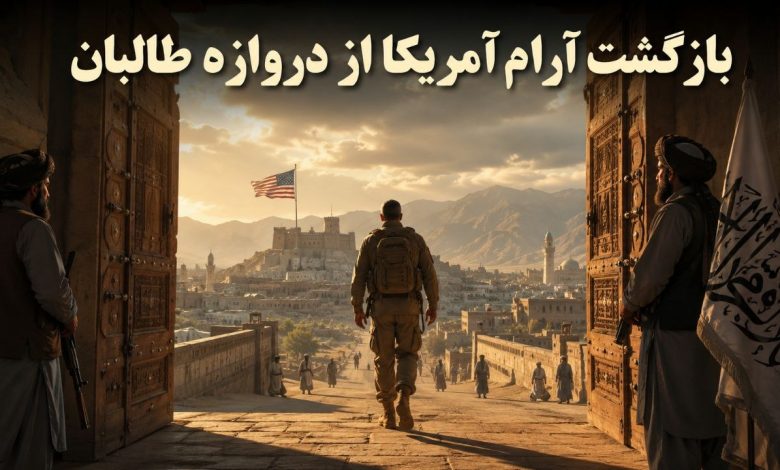
A certain individual claimed that the Afghan people’s resistance against the Taliban should not be considered resistance. However, by any measure, standing up to the Taliban — in all its forms and dimensions — is a precise and tangible example of ‘resistance.’ Whether one views the Taliban as a monopolistic and violent group with a Salafi interpretation of religion that has taken the Afghan people hostage, or as an intelligence organization operating under U.S. projects in the region and as an operational arm of the arrogance front, opposing the Taliban in either case is a legitimate and indeed obligatory form of resistance.
An administration that lacks both domestic and international legitimacy and relies on tools of repression to silence the people will naturally face resistant reactions, even if some may be dissatisfied with this resistance.
Resistance against oppressors, described in the Holy Quran as ‘rebels,’ is a religious duty. What administration is more oppressive than the Taliban, who over three decades have threatened the lives, property, and honor of the people? The recent resistance of the people of Herat against Taliban violations of personal honor is a clear example.
But in my view, the issue of resistance in Afghanistan goes beyond these points. The Afghan people are part of the resistance axis — an axis primarily characterized by anti-imperialism and steadfastness against American and Zionist hegemonic ambitions.
It was the people of Afghanistan who, throughout difficult times, from the martyrdom of Sayyid Hassan to the martyrdom of the Leader of the Ummah, bravely stood alongside Iran across a wide spectrum stretching from Afghanistan, through Iran, to Europe. They attended ceremonies and gatherings, mourned deeply, and overtly expressed solidarity with the resistance front — not the Taliban, who did not even offer condolences.
The Taliban administration refrained from issuing a condolence message for the martyrdom of these major leaders of the resistance axis and prevented any public gatherings in support of Iran within Afghanistan.
Here, the issue is no longer merely political, ethnic, or internal disagreement; it is one of choosing a side.
Five years have passed under Taliban rule in Afghanistan. During this time, the administration’s actions have shown more than anything that the Taliban have not stood against imperialist projects; on the contrary, in many instances, they have acted in ways that weaken the resistance front and serve the interests of its enemies.
From this perspective, the confrontation between the Afghan people and the Taliban should not be viewed merely as a set of scattered protests or a power struggle. At a deeper level, it is part of the popular resistance against a faction empowered by the United States that governs Afghanistan but has distanced itself from many ideals and values the Afghan people have sacrificed for.
Perhaps most importantly, today the Afghan people can no longer be equated with the Taliban.
The Afghan people are on one side of this equation, and the Taliban are on the other.
One stands with the people of the region and the resistance front; the other consciously moves in a direction that benefits the hegemonic front.
If anyone still doubts the Taliban’s alliance with the hegemonic front, one must either acknowledge their ignorance or presume they too support the hegemonic front — even if holding a title such as Deputy Ambassador.
Such a person should ask themselves: In the past five years, whose backs has the Taliban’s sword struck hardest? The United States and Zionism? Or the Afghan people and forces aligned with the resistance axis?
The religious duty of officials in the Islamic Republic of Iran is to stand alongside the Afghan people’s resistance against the Taliban, who serve the arrogance front. Whether anyone fulfills this duty is another matter.
Seyed Ahmad Mousavi, Cleric