UN Warns of Severe Displacement Crisis in Afghanistan Amid Economic and Climate Challenges
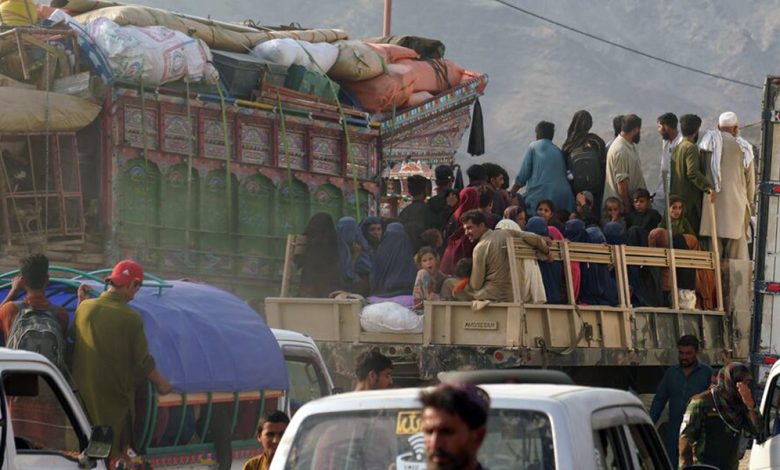
The United Nations has warned that Afghanistan is facing one of the world’s largest displacement crises, where widespread poverty, climate shocks, and the return of millions of Afghans are placing unprecedented pressure on communities still recovering from decades of war and turmoil. According to the latest socio-economic assessment by the UN Development Programme (UNDP), nearly 74% of the country’s population—approximately 29 million people—are unable to meet their basic living needs.
The report states that a fragile economy, ongoing humanitarian challenges, recurrent natural disasters, and the return of about 2.7 million Afghans have strained livelihoods and public services across the country. Prolonged droughts, devastating earthquakes, and reduced female participation in the economy have been cited as major factors slowing progress. Restrictions imposed by the Taliban administration on women’s work and education have, according to international organizations, significantly decreased their economic involvement, negatively impacting the overall economy.
Alexander de Croo, head of the UN Development Programme, who traveled to Afghanistan along with UN High Commissioner for Refugees Filippo Grandi, said: “In Afghanistan, crises do not usually happen one after another; they affect people simultaneously.” During their visit, the delegation met with returning families, aid organizations, and Taliban officials.
UN officials noted that the visit reflects the organization’s commitment to supporting long-term recovery and helping displaced families rebuild their lives. They met with residents affected by recent earthquakes in Jalalabad and subsequently traveled to the Sotan Valley, where reconstruction projects aimed at assisting families impacted by natural disasters are underway.
Support programs include flood protection schemes and irrigation systems that simultaneously reduce future risks and create employment opportunities. In these projects, women are engaged in producing wire mesh panels for protective walls, while men make bricks for flood control structures to safeguard farmland and villages.
De Croo emphasized that “emergency aid saves lives, but development returns life to people.” He highlighted that the UN trust fund for Afghanistan supports returnees, internally displaced persons, and host communities in Kunduz and Baghlan provinces. To date, the program has cleared over 6,400 square meters of land contaminated with mines, launched dozens of social infrastructure projects, and identified hundreds of vulnerable families in areas with high numbers of returnees who require permanent housing.
Meanwhile, the UN High Commissioner for Refugees (UNHCR) announced plans to strengthen protection support for Afghans along migration routes and expand legal pathways for resettlement, education, employment, and family reunification for those unable to return safely. The agency estimates that more than 570,000 Afghans will need resettlement opportunities by 2026.
After more than four decades of war, economic instability, and successive natural disasters, Afghanistan remains one of the world’s largest humanitarian and displacement crises—a crisis that, without fundamental changes in economic and social management, risks continuing indefinitely.