Seven 300-Year-Old Historical Artifacts Discovered in Sar-e Pol
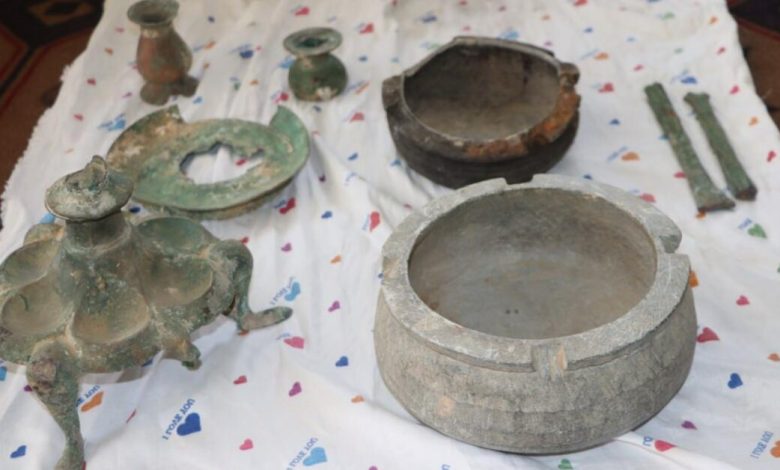
Seven historical artifacts estimated to be around 300 years old were discovered by residents of Farshan village in Sancharak district, Sar-e Pol province, and handed over to the Department of Information and Culture of the Taliban administration in the province. The Taliban’s Ministry of Information and Culture confirmed this in a statement published today, Wednesday, June 24.
According to the ministry, the recovered items include a small pot, lampstand, candlestick, a broken small pot, a plate holder, an oil container, and two wooden ladle handles. These objects are estimated to date back approximately three centuries and are set to be preserved after examination.
Ahmad Shah Din Dost, the Taliban-appointed governor of Sar-e Pol, described the local residents’ action as “commendable” and a sign of attention and responsibility toward historical assets. Abdul Ghafar Haqnama, head of the Taliban’s Information and Culture Department in Sar-e Pol, emphasized after receiving the artifacts that preserving and maintaining historical heritage is a “shared national and Islamic responsibility.”
These remarks come amid repeated concerns from the United Nations Educational, Scientific and Cultural Organization (UNESCO) in recent years about ongoing illegal digging, construction, and excessive excavations in Afghanistan’s registered historical sites. Cultural heritage experts also stress that protecting historical artifacts requires transparent frameworks, specialized oversight, and prevention of irresponsible interventions.
Afghanistan, with its several-thousand-year history, is considered one of the richest countries in the region in terms of cultural heritage. However, the destruction of the Buddhas of Bamiyan in 2001 by the Taliban remains one of the greatest losses to the country’s historical legacy in global memory and continues to cast a shadow over concerns regarding the protection of archaeological sites.