Putin’s Visit to Beijing Signals Strategic Reset Amid Global Crises
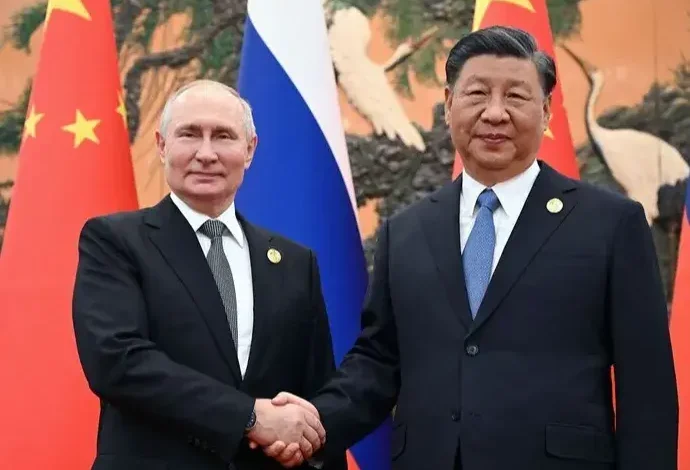
Vladimir Putin’s trip to China would be a significant event in international relations under normal circumstances, but the timing of his current visit transforms it into more than just a bilateral meeting between two presidents. The Russian president’s presence in Beijing just days after Donald Trump’s visit fuels speculation that Moscow and Beijing are recalibrating their strategic coordination in response to new developments in the international order.
In this regard, the timing of Putin’s visit carries far greater significance than the trip itself. The world is currently grappling with several major crises in which China, Russia, and the United States each play a significant role.
The official narrative from both sides regarding Putin’s visit focuses on expanding economic cooperation, deepening strategic partnership, and broadening bilateral ties. However, the language used in statements from the Kremlin and Beijing indicates that this visit encompasses dimensions beyond economics, with a stronger emphasis on security and geopolitical issues.
Putin’s swift trip to Beijing may convey Russia’s desire to solidify its coordination with China before any new realignments in China-U.S. relations take shape. He seeks to understand precisely what was discussed privately between Trump and President Xi—details not disclosed to the media—but which could impact the global order.
The crisis stemming from U.S. and Israeli aggression against Iran is undoubtedly one of the most critical issues addressed during both Trump’s and Putin’s visits to Beijing. The war in Ukraine is another matter of immense importance to the Russian side.
Both China and Russia are highly sensitive to instability in the region. Trump’s unpredictable actions have significantly heightened concerns in Moscow and Beijing. His behavior suggests he could suddenly strike a deal with China granting it substantial concessions, apply maximum pressure abruptly, abandon Ukraine, or escalate conflict with Iran.
This “instability in Trump’s decision-making” is a primary concern for Beijing and Moscow. Consequently, it is crucial for both parties to thoroughly assess Trump and what was discussed behind closed doors in Beijing.
China’s heavy dependence on energy imports and maritime trade means that any large-scale conflict involving Iran and the U.S. directly threatens Beijing’s economic security. Yet an even greater threat for China would be Iran’s defeat in this conflict, resulting in the Strait of Hormuz— a vital energy transit route—falling under exclusive U.S. control for years to come.
Russia, meanwhile, worries about the war in Ukraine. If Iran is defeated, the U.S. could focus its full attention on Ukraine, a prospect Moscow finds undesirable.
Therefore, one of the key topics likely discussed between Putin and Xi is enhancing coordination concerning the Iran-U.S. conflict.
The rapid pace of global crisis developments has complicated the situation so much that the presidents of China and Russia must update their coordination at the same speed. This explains why Beijing has hosted Seyed Abbas Araqchi, Donald Trump, and Vladimir Putin all within just two weeks.