Putin’s Visit to Beijing Signals Strategic Coordination Amid Global Crises
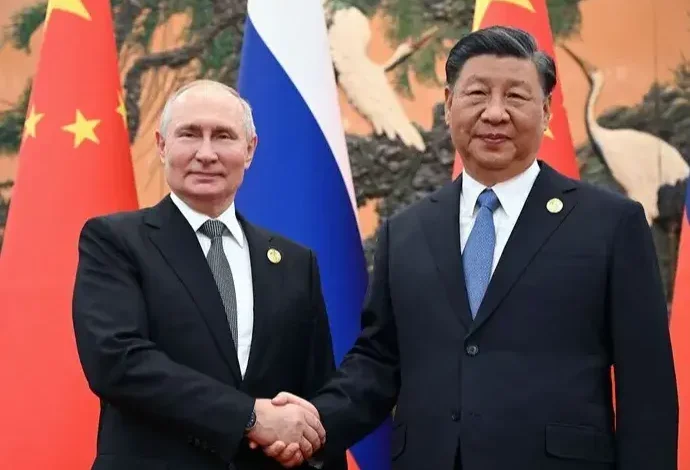
Vladimir Putin’s trip to China, an important event even under normal circumstances, has taken on added significance due to its timing, elevating it beyond a routine bilateral meeting between two presidents.
The Russian president’s presence in Beijing just days after Donald Trump’s visit strengthens speculation that Moscow and Beijing are recalibrating their strategic coordination in response to new international developments.
In this context, the timing of Putin’s visit holds far greater importance than the visit itself. This is because the world is embroiled in multiple major crises in which China, Russia, and the United States all play significant roles.
The official narrative from both sides about Putin’s visit speaks of expanding economic cooperation, deepening strategic partnership, and broadening bilateral ties. However, the language in statements from the Kremlin and Beijing reveals that this trip transcends economic matters, focusing primarily on security and geopolitical issues.
Putin’s swift journey to Beijing may convey Russia’s desire to solidify coordination with China before any new realignment emerges in China-US relations.
Essentially, Putin wants to understand precisely what was discussed between Trump and President Xi that remains undisclosed in the media yet could impact the global order.
The crisis surrounding US and Israeli aggression against Iran is undoubtedly among the most critical issues discussed during both Trump’s and Putin’s visits to Beijing.
The war in Ukraine is another paramount concern for the Russians.
Both China and Russia are highly sensitive to regional instability, and Trump’s unpredictable actions have sharply heightened Moscow and Beijing’s anxieties. Trump’s behavior is such that he could suddenly strike a deal with China granting significant concessions, apply maximum pressure abruptly, abandon Ukraine, or expand conflict with Iran.
This “decision-making instability of Trump” is a core issue for both Beijing and Moscow. Consequently, it is important for them to thoroughly assess Trump and what has been discussed privately in Beijing, away from the media’s eyes.
China’s heavy economic dependence on energy imports and maritime trade means that any broad conflict between Iran and the US would directly threaten Beijing’s economic security. Yet, an even greater threat for China would be an Iranian defeat in this war, which would allow the US to control the energy transit route in the Strait of Hormuz exclusively and for many years.
Russia is equally concerned about the war in Ukraine. Should Iran lose the conflict, the US could confidently focus on Ukraine, a scenario unfavorable to Moscow.
Therefore, one of the key topics likely addressed by Putin and Xi involves increasing coordination regarding the conflict between Iran and the United States.
The rapid pace of developments in global crises has complicated matters to such an extent that the presidents of China and Russia must update their coordination at the same speed.
This is precisely why Beijing hosts Seyyed Abbas Araghchi, Trump, and Putin all within just two weeks.