Afghan Health Minister Warns of Contract Cancellations for Non-Compliant Medical Institutes
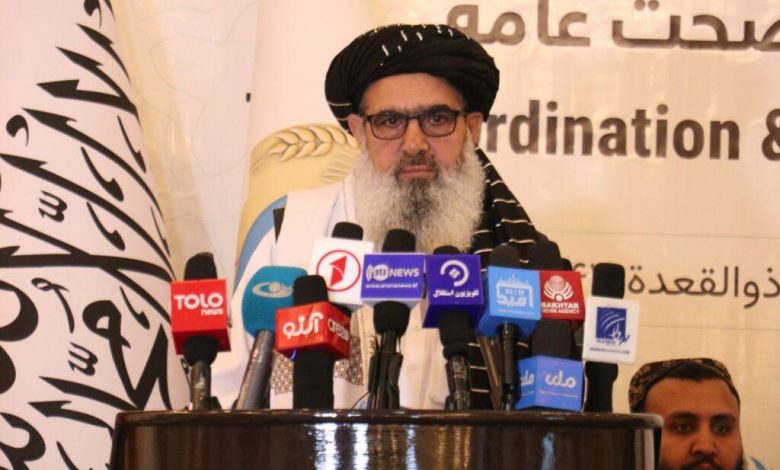
The Minister of Public Health announced that special quotas for specialist positions have been allocated for underserved provinces, and contracts of those medical institutions whose services do not meet the set requirements will be cancelled. He also emphasized intensified joint efforts to eradicate polio in the country.
Maulvi Noor Jalal Jalali made these remarks on Sunday during the opening ceremony of a four-day workshop on coordination and capacity building for provincial officials in Kabul. According to him, the current health system situation, challenges, and progress are discussed and exchanged during this meeting.
The Minister of Public Health said that the Directorate of Specialist Recruitment has been directed to allocate special quotas of specialist posts for underserved provinces to train specialists in various fields and compensate for the shortage of professional staff in these areas. Under the new regulation, candidates who pass the specialist exam are obligated to serve at health centers in districts for at least two years after graduation.
He also urged provincial officials to seriously pursue the standardization of paramedical institutes and continuously monitor the quality of teaching in these centers. According to him, a Traditional Medicine Department will be established at the Ghaznfar Medical Institute to provide professional training in this field.
Jalali, referring to complaints about the performance of some medical institutions, stated that in some provinces, due to poor management, staff salaries are paid late or below the specified amounts, and in many cases, medicines and medical consumables are not delivered to health centers as per the contracts. He stressed that donor countries’ aid must reach the deserving people; otherwise, the Taliban administration will take serious measures.
The Minister of Public Health requested provincial officials to obtain proposals, contracts, and memorandums of understanding from active NGOs and institutions and to monitor their activities precisely to prevent the violation of people’s rights. This comes as a lack of effective oversight over contracts has been a significant criticism in the health sector in recent years.
In another part of the meeting, representatives of international organizations also emphasized joint cooperation. Tajuddin Oyilo, UNICEF’s representative in Afghanistan, said the health sector still faces gaps and requires coordinated work.
Dr. Khushal Zaman, the World Health Organization’s representative, also stated that Afghanistan remains one of two countries where the poliovirus is circulating. He said that in 2025, 21 polio cases have been recorded, and three additional positive cases have been reported since the beginning of this year.
He added that polio eradication is a priority for the Ministry of Public Health and that, given existing resources, Afghanistan can eradicate this virus, provided coordination, monitoring, and program implementation continue effectively.