Diplomatic Shift: Iran-US Negotiations in Islamabad Signal Power Play Change in West Asia
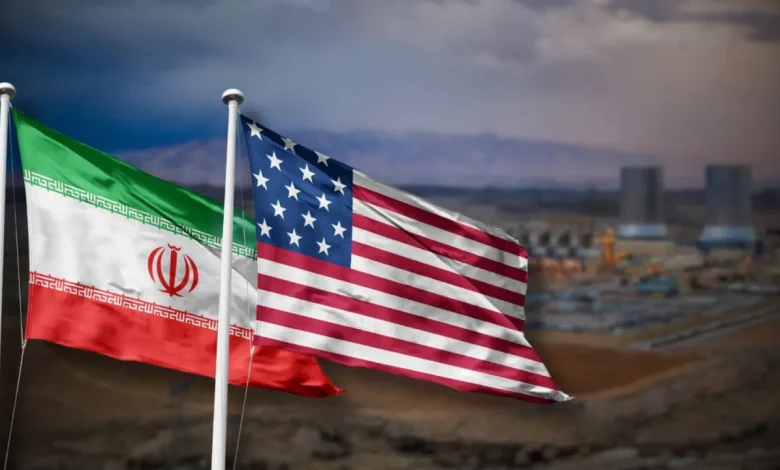
It remains uncertain whether the Iran-US talks will take place in Islamabad; however, if they do, the composition of the negotiation teams will notably change.
On the American side, J.D. Vance represents the United States. He holds significant authority within the US power structure. When Americans vote, they vote for an “electoral ticket” that includes the vice presidential candidate, which in this period is Mr. Vance.
On the Iranian side, Dr. Qalibaf heads the negotiation team and is currently one of Iran’s most prominent and powerful political figures.
To put it plainly, diplomats who previously engaged in talks have now been replaced by political figures active on the ground.
In the two prior rounds of talks, both of which failed amid US and Israeli military attacks, negotiations centered more on legal technicalities than on the division of interests.
But now the negotiations’ conditions have changed. There is little talk of tedious legal details; instead, the parties will directly negotiate over how to divide power and wealth resources in West Asia.
Mr. Vance’s trip to Pakistan has begun, and simultaneously, Dr. Qalibaf, while at the airport, declared that the US has failed to fulfill two commitments. In a tweet, he stated that a ceasefire in Lebanon and the release of Iran’s frozen funds were prerequisites for starting negotiations, and as long as the US does not meet these conditions, he will not travel to Islamabad.
Unlike negotiations between strong and weak parties, where discussions focus on mechanisms for the weaker side to meet the stronger side’s demands, negotiations among powerful parties involve bargaining to secure greater benefits and interests. Currently, what will unfold in Pakistan is a straightforward negotiation about each side’s share of power and wealth resources.
After a forty-day battle with the US and Israel that demonstrated Iran’s military dominance, Iran now seeks to consolidate this power regionally. The US side’s eagerness to reach an agreement through negotiation indicates that, at least for now, it accepts its inability to confront Iran militarily and acknowledges the beginning of a power shift favoring Iran in West Asia. However, the US aims to exit the crisis with fewer casualties and damages.
Naturally, the US is not pleased with this status quo, but the pressure that Iran’s military strength exerts on US financial markets and the dollar is far more dangerous than formally recognizing Iran as a superpower and accepting its share in the region’s power and wealth resources.
Energy markets in the US and Europe—especially futures markets in New York and London—are approaching one of their most sensitive settlement periods this month.
With supply disruptions upsetting market balance, many market players face positions that cannot be closed without heavy costs. Pressure to source alternatives or exit contracts has sharply increased, pushing “margin call” risks to unprecedented levels.
If these pressures are not managed in the coming days, they could cause fractures in energy markets, with ripple effects spreading to other financial sectors—a situation threatening not just profitability but also the stability of major market players.
The US does not have much time. The US energy market’s tolerance threshold likely ends with the ceasefire period announced by President Trump. Both Mr. Vance and President Trump are fully aware that any concession now to Iran will cause less damage than the continued closure of the Strait of Hormuz.
Under such conditions, the US must yield to most of Iran’s demands. Failure on the battlefield, combined with extreme volatility in New York’s energy market, could create one of the most serious structural challenges to US financial supremacy in recent years—a challenge that, if prolonged and repeated, could mark the beginning of a protracted decline for the US.
It is now understandable why President Trump is willing to accept a shift in the power balance favoring Iran in West Asia, unconditionally release Iran’s frozen funds, and prevent Israeli attacks on Lebanon, in exchange for restoring energy flow through the Strait of Hormuz—under legal regimes and security considerations valued by Iran—to pre-war levels.
Seyed Ahmad Mousavi, Correspondent
This is a very interesting take on how power dynamics are shifting in the region 🌍⚖️ It shows that these talks are not just about peace, but also about influence and control over resources 💼🛢️ The coming days will be crucial for both politics and global markets 📉🤝 Hoping things move toward stability so