Taliban Statistics Office Says More Than 92% of Afghanistan’s Roads Are Still Unpaved
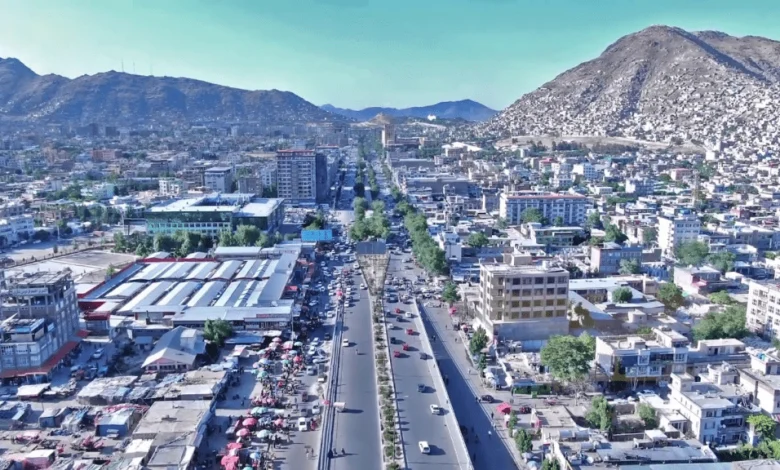
The General Directorate of Statistics and Information has announced that of Afghanistan’s total road network of 245,072 kilometres, only 18,241 kilometres are paved, while 226,831 kilometres are unpaved. The figures show that more than 92% of the country’s roads are still unpaved.
In a statement on Tuesday, the directorate said the survey was carried out for the first time with the aim of providing a comprehensive picture of the condition of Afghanistan’s road network. According to the department, the data for the study was collected and analysed from the Ministry of Public Works, the Ministry of Rural Rehabilitation and Development, OpenStreetMap data and satellite images.
Based on the findings, Kabul has the longest paved road network among the provinces at 4,084 kilometres, while Nuristan ranks lowest with 12 kilometres. In terms of the share of paved roads in the total network, Kapisa ranks first with 25.1%, while Daikundi and Ghor recorded the lowest share at 0.5%.
The General Directorate of Statistics and Information also said the survey identified and recorded 4,747 small and large bridges, 8,681 culverts and 854 flood-control structures. Based on this information, 16 destroyed bridges and 249 locations in need of bridge construction were also identified along the country’s road network.
The survey also assessed the access of rural populations to the road network. Based on a two-kilometre distance criterion, about 41% of the rural population has access to paved roads, 63% to public roads and 96% to the country’s total road network.
The General Directorate of Statistics and Information said a unified layer of the country’s road network could be used in decision-making, planning, prioritising infrastructure projects, rebuilding roads and bridges, disaster management and improving people’s access to public services. It added that the effective use of geographic information could help evidence-based decision-making and better use of resources.